Amid the global wave of carbon neutrality and sustainable development, biochar has transitioned from theory to industrial practice due to its unique environmental benefits and energy potential. Biochar is not only a critical negative-carbon technology for combating climate change but also a multifunctional platform bridging agriculture, energy, environmental protection, and new materials. This article explores biochar’s core technology—pyrolysis, its industrial chain development, and market opportunities and challenges from an industrial perspective, providing strategic insights for stakeholders.
Definition and Carbon Sequestration Mechanisms of Biochar
Biochar is a highly aromatic, carbon-rich, porous, and stable solid product generated through specific thermochemical conversion processes—primarily pyrolysis—under strictly controlled oxygen-free or anaerobic conditions. It is derived from biomass feedstocks such as agricultural residues, forestry waste, energy crops, and solid waste. Its core value lies in converting unstable carbon in biomass into a highly stable carbon structure, enabling long-term carbon sequestration.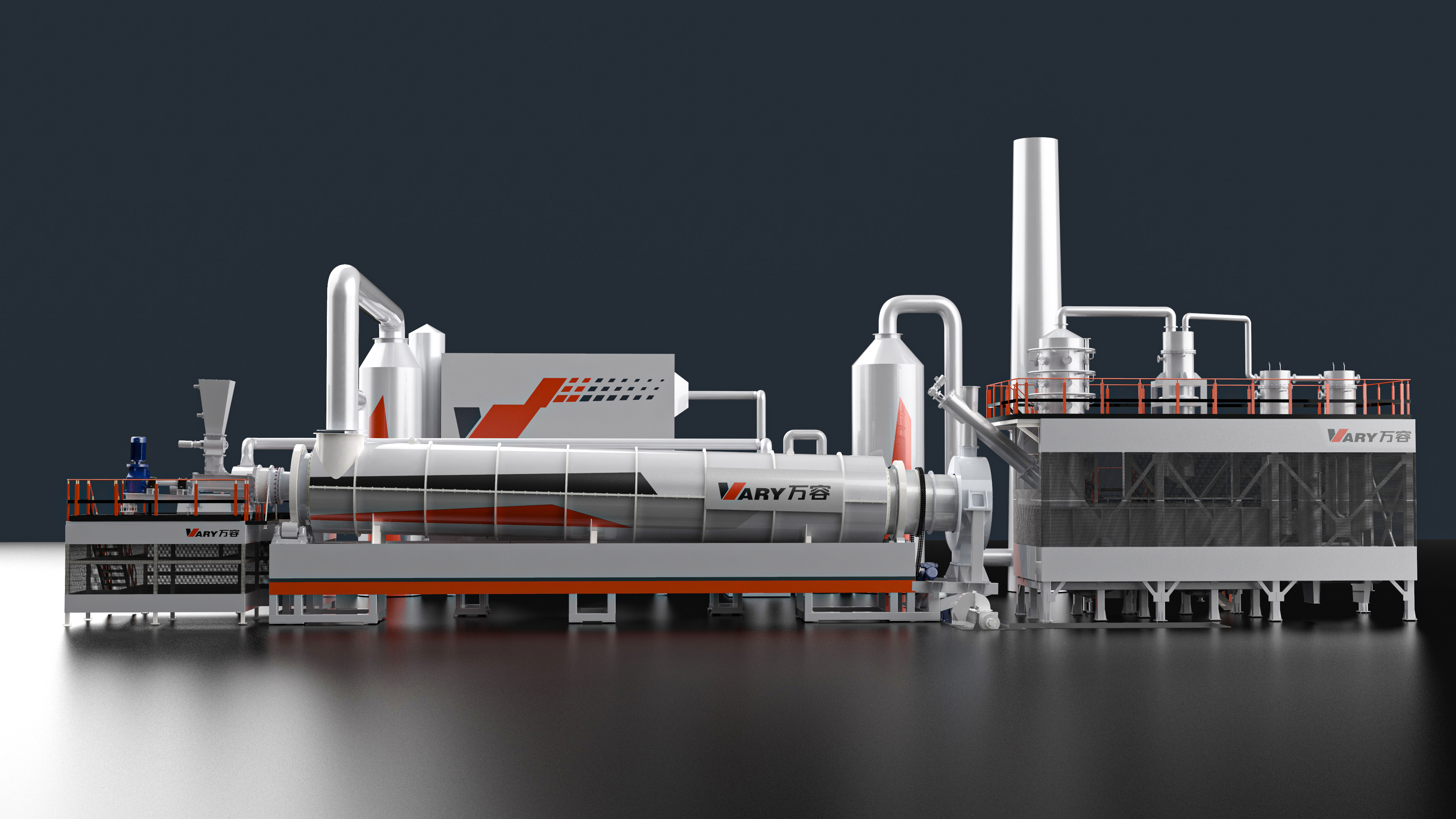
Biochar’s carbon sequestration potential stems from its biological inertness, allowing it to persist in soil for centuries to millennia. This transforms atmospheric CO₂—fixed via photosynthesis into biomass—into a stable "carbon reservoir" in the geosphere. From an industrial perspective, this represents a shift from "biocarbon" to "mineralized carbon," offering an effective carbon removal pathway. Internationally, institutions like Puro.earth and Verra certify and trade biochar’s carbon credits, providing economic incentives for biochar projects. Rigorous life cycle assessments (LCAs) are essential to validate its net-negative emissions.
Biochar’s physicochemical properties, production costs, and applications depend on feedstock selection. Common feedstocks include:
Agricultural residues: Straw (rice husks, corn stalks, wheat straw), livestock manure.
Forestry waste: Branches, sawdust.
Industrial organic waste: Food processing residues, sewage sludge (requires pollutant monitoring).
Energy crops: Switchgrass, miscanthus.
These feedstocks, especially solid waste, form the backbone of scalable production.
Drying: Reduces moisture, lowers energy consumption, and improves syngas calorific value.
Shredding/Cutting: Optimizes particle size for better heat and mass transfer.
Densification: Pelletizing or briquetting facilitates storage, transport, and continuous feeding.
Pyrolysis equipment selection is pivotal for industrial-scale biochar production, requiring evaluation of production scale, feedstock characteristics (type, moisture, particle size, ash content), and target biochar properties (surface area, porosity, fixed carbon content).
Batch Pyrolysis Systems: Flexible and low-cost for small-scale, diverse feedstocks.
Continuous Pyrolysis Systems: Ideal for large-scale production. Key technologies include:
Rotary Kilns: Adaptable to irregular or large-sized feedstocks, high biochar yield.
Screw Conveyor Reactors: Compact, efficient heat transfer, suitable for fine, uniform feedstocks.
Fluidized Bed Reactors: Superior heat/mass transfer for fast pyrolysis or gasification (focusing on bio-oil), but require precise feedstock specifications.
Industry leaders like Vary Tech, with 20 years of experience in solid waste resource recovery, have pioneered rotary kiln-based pyrolysis technology. Through six generations of upgrades, Vary Tech offers batch, semi-continuous, and continuous systems tailored to diverse production needs. The company’s industrial biochar production line—China’s first of its kind—achieves outputs of up to 50 tons of carbonized material and 100 tons of torrefied material per unit. As a member of the International Biomass Torrefaction and Carbonization Council (IBTC), Vary Tech exemplifies expertise and alignment with global standards.
Biochar’s performance depends on its physicochemical properties:
Physical: Surface area (BET), pore distribution, density, water retention, thermal stability.
Chemical: pH, ash content, fixed carbon, volatile matter, elemental composition (C, H, N, O, S), cation exchange capacity (CEC), surface functional groups, PAHs, and heavy metals.
International standards (e.g., IBI, EBC) and emerging domestic regulations ensure biochar safety and efficacy by setting limits on contaminants.
Biochar serves as a clean fuel with high fixed carbon and adjustable calorific value. After densification, it replaces coal or traditional charcoal in:
Industrial boilers, district heating, and household cooking.
High-end markets (e.g., low-smoke BBQ charcoal).
High-quality biochar (low ash, high reactivity) acts as a sustainable reductant or carburizer in ironmaking, silicon metal, and non-ferrous metal production, reducing reliance on fossil fuels and cutting emissions.
Energy Storage: Electrodes for supercapacitors and batteries.
Green Construction: Lightweight, insulating, and carbon-sequestering additives for concrete and asphalt.
Polymer Composites: Biochar enhances mechanical, thermal, and flame-retardant properties while replacing carbon black in tires, inks, and coatings.
High costs of advanced pyrolysis and byproduct valorization.
Inconsistent solid waste supply chains and market awareness.
Lack of unified standards and policy support.
Global carbon neutrality goals and circular economy trends.
Carbon credit markets and technological advancements.
Biochar stands at a historic inflection point. Through innovation, optimized supply chains, and market expansion, it can emerge as a cornerstone of carbon neutrality, agricultural sustainability, and circular economies. Beyond an eco-friendly material, biochar represents a transformative force in green technology and economic growth.
Follow Vary Tech to explore cutting-edge biochar pyrolysis technology and solid waste solutions!


