Here is the optimized and professionally formatted version of your text, structured for enhanced readability, scannability, and impact:
South Korea is one of the world's most active hubs for petroleum refining, petrochemical manufacturing, and shipping. But that activity comes with a hidden by-product: large volumes of tank-bottom sludge, oily sludge, oil-contaminated soil, and ship-generated oil residues—produced daily across refineries, storage terminals, maintenance yards, ports, and vessels.
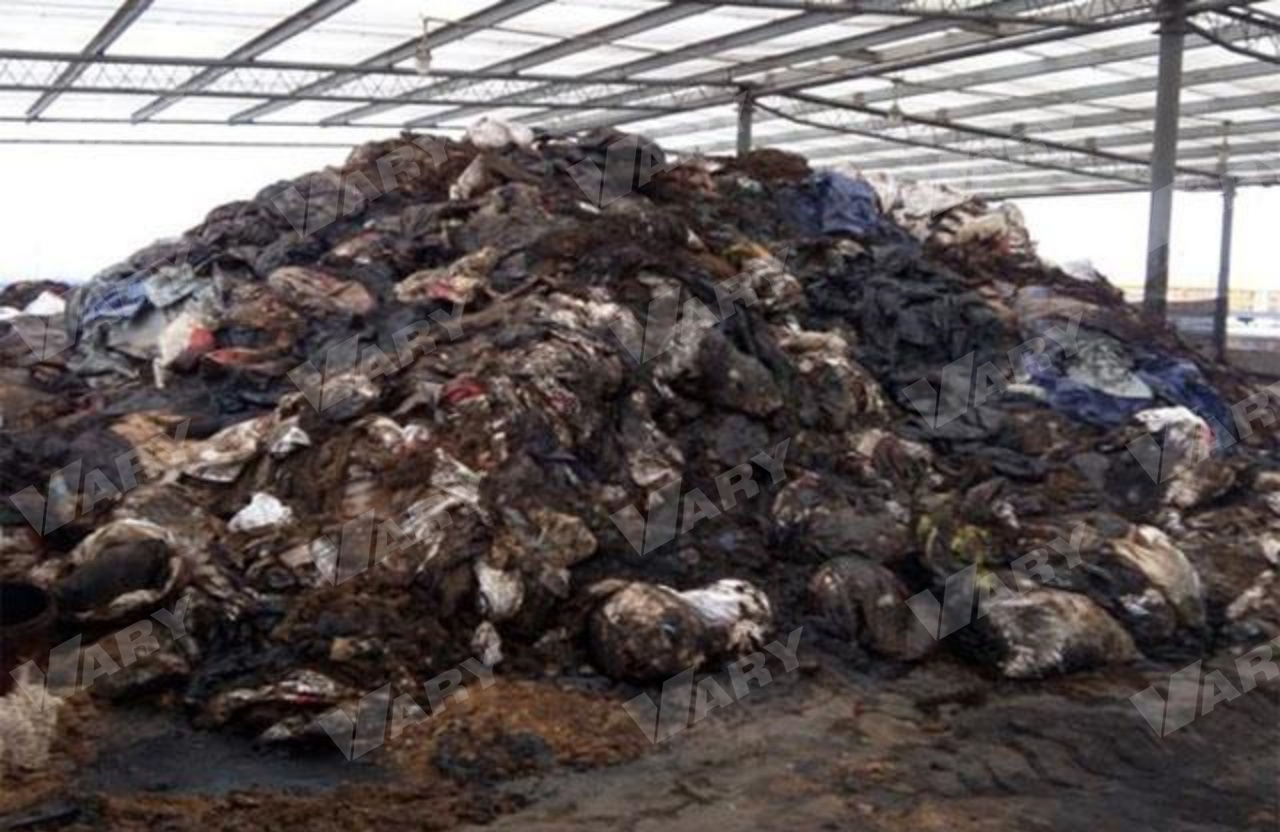
These materials are complex mixtures of water, petroleum hydrocarbons, sediment, metals, and other impurities. Their composition varies widely by source—in moisture content, oil content, ash, and pollutant profile. Mismanaged, they can cause long-term contamination of soil, groundwater, and coastal waters. Traditional landfilling and straight incineration reduce volume, but they sacrifice recoverable oil value, incur high disposal costs, and create secondary pollution risks.
With Korea steadily tightening regulations on designated waste and marine pollution, oily sludge treatment is no longer just about disposal—it is about oil recovery, energy reuse, and compliant resource circulation.
Stricter Rules, Smarter Solutions: Why Korea's Oily Waste Market Is Transforming
South Korea applies rigorous, end-to-end controls on oily waste, enforced jointly by the Ministry of Environment, the Ministry of Oceans and Fisheries, and local authorities.
-
Designated Waste & Full Lifecycle Accountability:
Under Korea's Waste Management Act, waste oil is classified as "Designated Waste"—a category subject to enhanced oversight. From generation to storage, transport, and final treatment, generators are required to file declarations, secure disposal-plan approvals, and maintain transfer records. Treatment can only be carried out by licensed operators with proven technical capability.
-
Marine Dumping Essentially Eliminated:
Korea began phasing out land-sourced waste dumping at sea in 2006. Municipal sewage sludge and livestock manure were banned from ocean discharge in 2012, and by 2016, the phase-out was largely complete. Consequently, oily sludge must now be treated on land, driving strong demand for volume-reduction, detoxification, and resource-recovery technologies.
-
Strict Port and Shipping Enforcement:
In ports and coastal waters, Korea strictly enforces the MARPOL Convention and domestic marine laws. Oily sludge, waste oil, and oily bilge water from ships cannot be discharged at sea; they must be collected through authorized port reception facilities and treated onshore.
The Takeaway: For refiners, petrochemical operators, storage-terminal managers, and shipping lines, oily sludge is no longer just an environmental cost line. It is an operational compliance issue—and a potential source of recoverable value.
Thermal Desorption vs. Pyrolysis: One Sludge, Different Routes
Oily sludge is not a one-size-fits-all feedstock. No single process works for everything. Thermal treatment of oily sludge generally follows one of two pathways, depending on material properties:
1. Thermal Desorption: Recovering the Oil That Is Already There
For sludge with high oil content and good recoverable hydrocarbon value, indirect heating vaporizes water and petroleum hydrocarbons from the solid matrix. The vapor is then condensed and recovered as liquid oil. This is primarily a physical separation process with the objective of recovering the original oil fraction with minimal chemical alteration.
2. Pyrolysis: Cracking the Heavy, Hard-to-Recover Fractions
For sludge rich in heavy hydrocarbons that thermal desorption cannot fully handle, the material is heated further under oxygen-free or low-oxygen conditions. This cracks large organic molecules into three streams:
-
Combustible Syngas: Purified and recirculated to supply process heat, substantially reducing external fuel demand.
-
Condensable Oil: Assessed for use as industrial fuel, blending component, or refinery feedstock after separation and filtration.
-
Solid Residue: Must be tested for heavy metals and leaching toxicity before being considered for construction-material applications or other recovery pathways.
Environmental Performance Is a System Issue
Oxygen-free conditions inside the reactor help suppress dioxin formation, but the environmental performance of a thermal treatment plant depends on the entire system, not just the furnace. To prevent the generation of dioxins, acid gases, particulates, and VOCs, a well-engineered oily-sludge thermal treatment system must address:
-
Feedstock pre-treatment and fully enclosed pneumatic conveying
-
Real-time control of reactor oxygen and temperature
-
Rapid gas extraction and staged condensation
-
Stable, controlled combustion of non-condensable syngas
-
Rapid quench cooling of flue gas
-
Multi-stage dust removal, acid scrubbing, and integrated gas cleaning
-
Compliant disposal of wastewater, pyrolysis residue, and concentrated contaminants
A Policy Window Is Opening—and the Technology Race Is On
South Korean research institutions have been actively exploring thermal treatment technologies. While studies show clear energy-recovery potential (such as mixing dewatered oily sludge with sawdust to produce solid fuel), the hydrocarbons in oily sludge are fossil-based, making them an alternative fuel rather than renewable energy.
Simultaneously, Korea's circular-economy strategy is promoting the integration of waste-plastic pyrolysis oil into refinery feedstock streams. While plastic-derived pyrolysis oil and oil-recovered from sludge differ in waste classification, the policy direction is unmistakable: Korea is moving beyond disposal-only thinking toward high-level resource circularity.
Vary Tech: From Component Supplier to Integrated Solution Provider
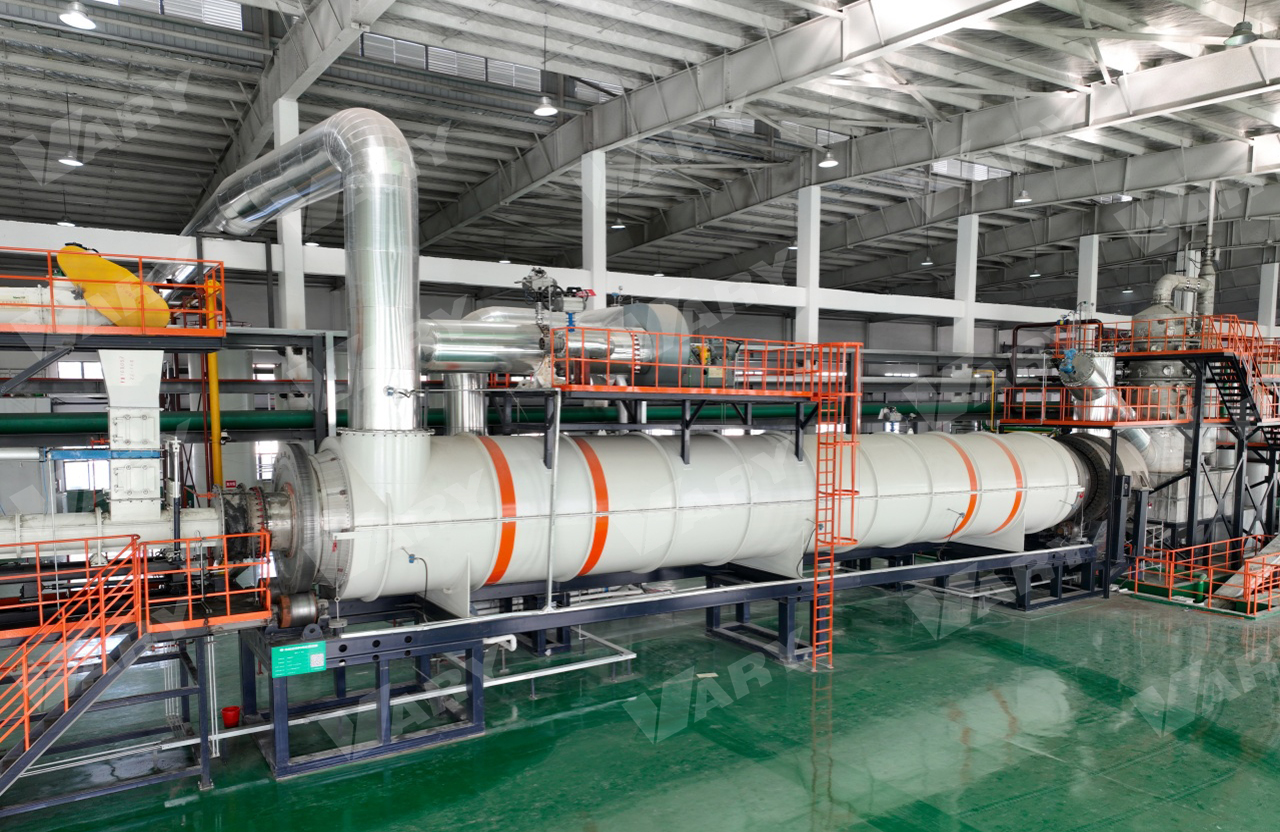
Vary Tech has spent nearly two decades developing and refining anaerobic pyrolysis and thermal treatment equipment for organic solid waste. Depending on feedstock properties and project scale, our large-scale continuous thermal treatment systems can achieve processing capacities of 150 to 240 tonnes per day. To date, we have delivered over 100 complete systems worldwide, including projects in South Korea, Japan, Brazil, India, and Malaysia.
Vary Tech's Growing Track Record in Korea
|
Year
|
Milestone
|
|
2023
|
Commissioned self-developed electromagnetic pyrolysis furnaces for waste-plastic and waste-tyre treatment. Joined Korean waste-to-energy industry associations.
|
|
2024
|
Signed commercial cooperation agreements on chemical recycling with Korean environmental partners during INC-5 in Busan.
|
|
2025
|
Exhibited pyrolysis technologies and integrated solutions at RETECH Korea, engaging with local energy and resource-circulation companies.
|
Proof Point: A Running Reference Project in China
In Jiangsu Province, Vary Tech participated in constructing a modular, continuous, intelligent oily-sludge resource-recovery facility with a planned annual capacity of 80,000 tonnes. Phase I—already in stable, continuous operation—processes 127 tonnes per day (approx. 38,000 tonnes/year).
Five Core Capabilities for Real-World Projects
-
Feedstock-Driven Process Design:
We match pre-treatment, thermal desorption, or deep pyrolysis to the specific profile of your sludge—no "one machine fits all" shortcuts.
-
Continuous, Reliable Operation:
Our systems integrate continuous feeding/discharging, flexible multi-stage sealing, automatic decoking, and safety interlocks.
-
Cascaded Energy Recovery:
Syngas, flue-gas waste heat, and system hot air are recovered and reused at different temperature levels to reduce operating costs.
-
Full-System Environmental Control:
Enclosed conveying, rapid gas extraction, and integrated flue-gas cleaning work together to meet Korean local emission limits.
-
Graded Output Management:
We define separate pathways (recycling, refining, or compliant disposal) based on actual oil quality and residue test results, balancing resource value with regulatory certainty.
From Compliance Cost to Value-Recovery Asset
With marine dumping phased out and designated-waste controls tightened, Korea's oily-sludge treatment market is at a strategic inflection point. The shift from compliance-driven disposal to value-driven circularity becomes a reality only when feedstock testing, process design, equipment engineering, and emissions control are planned as a single integrated system.
Meet Vary Tech at RETECH 2026
From 2–4 September 2026, Vary Tech will showcase its integrated thermal-desorption and anaerobic-pyrolysis solutions for oily sludge at RETECH 2026—Korea's premier exhibition for waste, resource recycling, and environmental technology.
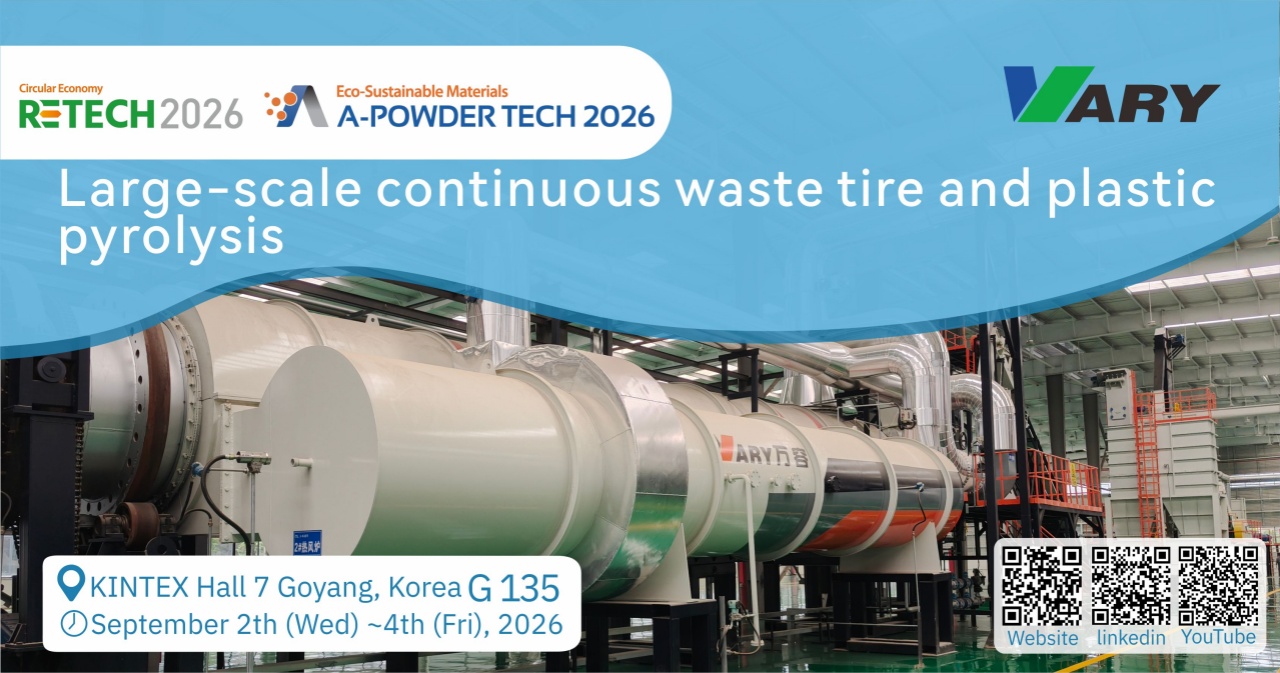
We invite you to visit Booth 135, Hall 7, KINTEX Exhibition Center II, Goyang City, to speak directly with our technical team. Let's discuss practical, site-specific pathways for volume reduction, detoxification, and resource recovery—and explore how we can turn your oily-sludge challenge into a measurable commercial advantage. We look forward to meeting you in Goyang.


