In February 2026, the Geneva International Conference Centre will host the ultimate negotiations that will shape the global landscape of plastic circular economy and related industries. Delegates from all countries will conduct the final consultations on the official text of the world’s first legally binding Global Plastic Treaty.
This is more than just an environmental agreement; it is a "global framework" that will redefine the rules for the trillion-dollar plastic circular economy. From the EU’s pioneering plastic taxation to countries racing to set post-consumer recycled (PCR) plastic content targets, a profound transformation sweeping every nation and sector is now underway.
The Intergovernmental Negotiating Committee (INC) process for the Plastic Treaty launched by the United Nations Environment Assembly (UNEA) forms the top-level design of this plastic recycling transformation. Reviewing the negotiation process, differences and consensus coexist.
In 2022, the first session of the INC for the Plastic Treaty (INC-1) was held in Uruguay, where all parties agreed to formulate an international legal instrument covering the full life cycle of plastics, with an ambitious goal.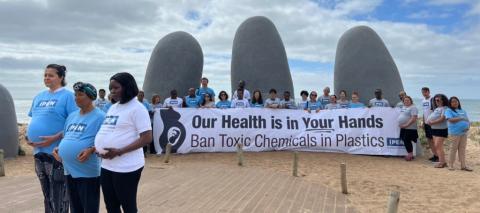
In 2023, the second and third sessions of the INC (INC-2 and INC-3) were held in France and Kenya respectively. The global focus shifted to specific issues such as production controls, hazardous chemical additives and the crucial financing mechanisms, and the divergent demands of developed and developing countries began to emerge prominently.
In 2024, the fourth and fifth sessions of the INC (INC-4 and INC-5) were convened in Canada and the Republic of Korea, pushing the negotiations into the deep water phase. Production controls became the biggest point of divergence. The EU and other parties actively promoted production cap clauses, while major petrochemical-producing countries such as the United States and Saudi Arabia held a reserved attitude, leading the INC-5 in the Republic of Korea to reach a deadlock.
Vary Tech was honored to participate in the INC-5 side event from November 25 to December 1, 2024. Vary Tech has established a physical closed-loop system for the recycling of plastic waste from end-of-life home appliances, and is pioneering innovative technological pathways for plastic waste chemical recycling, and developed plastic circular economy solutions with both scale and in-depth technical support. These successful initiatives China's actionable solutions and scientific and technological support for global plastic pollution governance.
Li Bin, Senior Research Fellow and PhD Supervisor of Donghua University, and Deputy Director of the GRPG Office, stated that chemical recycling is the ultimate method to convert plastic waste into stable raw materials, and displayed the industrial application cases of Vary Tech's core equipment for plastic waste chemical recycling on site.
The INC-5.2 in Geneva in December 2025 and the upcoming INC-5.3 in Geneva in February 2026 will focus on finalizing the official legal text of the treaty. The ability to strike a balance between "production caps" and "waste restrictions", and establish a fair global financing and technology transfer mechanism will determine the ambition and effectiveness of the Global Plastic Treaty.
The essence of these negotiations is the competition for the right to set the rules of the global plastic economy in the future. The official text of the treaty will set the bottom line for national legislation and directly determine the future investment directions of the hundreds-of-billions-of-US-dollar plastic and recycling industries.
The European Union is widely regarded as the “regulatory leader” in global plastic governance, and its policies have a significant spillover effect.
Since 2021, the EU has levied a tax of approximately 800 euros per tonne on member states based on the volume of non-recyclable plastic packaging waste, which internalizes environmental costs directly and forces enterprises to reduce the use of virgin plastic.
The directive imposes a comprehensive ban on single-use plastic products such as tableware, straws and cotton swabs from the source, directly changing the material choices of the fast-moving consumer goods and catering industries.
Through the combined measures of "market access + green standards", the EU is building a closed-loop plastic circular economy system. This serves not only as an environmental policy but also a strategic instrument to reshape its industrial competitiveness and lead the global green market.
Faced with pressures and opportunities, major economies around the world have introduced national strategies to race for the new track of the circular economy.
The United States Environmental Protection Agency (EPA) has set a target of 25% PCR plastic in plastic beverage bottles by 2025. Although there is no federal uniform mandate, leading legislation in states such as California and voluntary commitments from brand owners are driving the market.
Canada plans to use 30% recycled plastic in all plastic packaging by 2025, with policy intensity closely following the EU.
Japan has enacted the Plastic Resource Circulation Act and implemented the "3R+" principle (Reduction, Reuse, Recycling, Replacement), with the goal of achieving 100% effective utilization of all plastics by 2035, focusing on technological innovation and refined management.
Thailand’s Plastic Waste Management Roadmap sets an ambitious target of 100% plastic waste recycling by 2027, and innovatively introduces a "plastic credit" trading system to incentivize recycling through market-based mechanisms.
Australia’s National Packaging Targets require an average recycling rate of 50% for plastic packaging by 2025.
Indonesia has banned the import of plastic waste since 2025, forcing the research and development of domestic recycling infrastructure and chemical recycling technologies, and transforming from "the world's garbage dump" to an independent circular economy.
China has elevated plastic waste recycling and utilization to the national strategic level. In the early stage of the 14th Five-Year Plan, policies first clarified the development direction, encouraged the high-value utilization of plastic waste, and listed chemical recycling as a key technology for promotion. Starting from 2022, policies have entered a precision regulation phase, providing a regulatory basis for chemical recycling through documents such as Technical Specifications, and deeply integrating chemical recycling with industrial green transformation and the national "Dual Carbon" goals.
The increasingly stringent global policy environment is bringing disruptive changes and huge opportunities for related industries.
"Reduction" and "substitution" have become the bottom line for survival. Traditional petrochemical enterprises are facing pressure of capacity restructuring and must transform into the fields of bio-based plastics, degradable materials or high-quality recycled plastics.
The golden development period has arrived. Mandatory PCR plastic content targets have created a stable and growing global demand for high-quality recycled plastics, driving investment and innovation in front-end sorted collection, mechanical recycling and chemical recycling technologies. This has brought better development opportunities for technological innovation enterprises engaged in plastic waste physical and chemical recycling, represented by Vary Tech. Mechanisms such as Thailand’s "plastic credit" have provided new financing and profit models for the industry.
Green supply chain restructuring has become the core competitiveness. Brand owners must redesign product packaging to ensure recyclability and meet PCR plastic content requirements, otherwise they will face access barriers in markets such as the EU and risks to consumer reputation.
Chemical recycling (pyrolysis, depolymerization, etc.) is highly expected to handle mixed plastic waste that is difficult to recycle physically. Indonesia’s determination of transformation indicates that countries mastering advanced recycling technologies will gain an advantageous position in the future global resource circular economy system.
The trend of global plastic pollution governance is irreversible. This is no longer just an environmental issue, but a strategic issue related to future industrial competitiveness, resource security and international discourse power. Only countries and enterprises that actively embrace transformation and lead circular economy models through innovation can secure the future in this profound global green industrial revolution. To learn more about advanced chemical recycling of plastic waste, follow Vary Tech’s innovations!
Interpretation of the PPWR Policy: https://www.reloopplatform.org/ppwr/?gad_source=1&gad_campaignid=21512837651&gbraid=0AAAAA9-6uqpgBuHctANb0vczcVKJnB2LD&gclid=Cj0KCQiAkPzLBhD4ARIsAGfah8jhhZRF3AZt1xofWwK-bQLl4LHoQmMlrMYFJNNgttyCFL5Dry8_xSsaAqQgEALw_wcB


