In the field of solid waste disposal, thermochemical treatment technologies occupy a critical position. Incineration has decades of large-scale industrial application history and ranks among the most mature and widely applied thermal treatment technologies. As an important resource-recovery technical route, pyrolysis has attracted growing attention in recent years for waste plastics, waste tyres, oil-bearing wastes, biomass and certain organic hazardous wastes.
When faced with these two technical routes, investors and waste-generating enterprises often raise several key questions: What are the essential differences between incineration and pyrolysis? Can pyrolysis replace incineration? From the perspectives of environmental compliance and investment returns, how should one choose?
This article systematically compares pyrolysis and incineration across five dimensions: reaction mechanism, product destinations, environmental control, investment/operation performance, and applicable feedstock—to help readers build a clear technical evaluation framework.
Fundamental Difference in Reaction Mechanism: Oxidative Combustion vs Oxygen-Free Cracking
The most essential distinction between incineration and pyrolysis lies in reaction atmosphere and technical objectives.
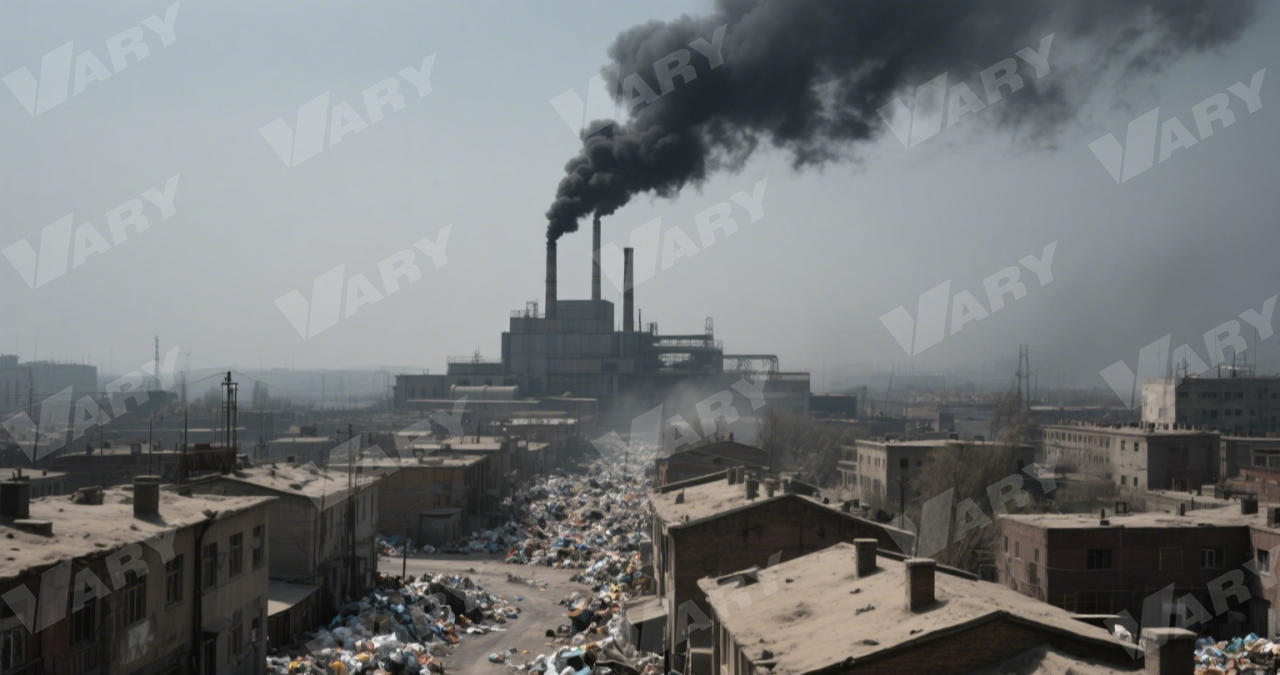
Incineration is a high-temperature thermal treatment process carried out in the presence of air or oxygen, targeting full oxidation of organic matter. Elements such as carbon, hydrogen and sulfur undergo oxidation reactions at high temperatures, forming products dominated by CO₂ and H₂O, while pollutants including SO₂, NOₓ and HCl are also generated depending on feedstock composition and combustion conditions, accompanied by massive heat release.
From the perspective of overall process targets, incineration pursues volume reduction, hazard elimination and energy recovery: maximising organic destruction, reducing waste volume and hazard potential, and recovering thermal energy via waste-heat boilers.
Pyrolysis, by contrast, is performed under oxygen-free or extremely low-oxygen conditions. Organic macromolecules are broken, cracked and restructured upon heating to produce three major product streams: pyrolysis oil, pyrolysis gas and solid carbonaceous residues.
Unlike incineration, pyrolysis does not target full oxidation of organic carbon into CO₂. Instead, it preserves carbon and chemical energy within oil, gas and carbon-rich products to enable subsequent energy utilisation, chemical processing or material recycling.
The most intuitive distinction can be summarised as:
Incineration emphasises full oxidation, volume reduction and hazard elimination; pyrolysis emphasises decomposition-conversion and resource recovery.
Product Destinations: Incineration Focuses on Energy Recovery; Pyrolysis Prioritises Material Recycling
The primary usable value generated by incineration comes mostly from thermal energy. High-temperature flue gas from waste combustion passes through waste-heat boilers to generate steam for power generation, district heating or industrial steam supply. Meanwhile, flue gas must be purified by acid-removal, denitrification, dust-removal, activated-carbon adsorption and other systems prior to discharge. Bottom ash and fly ash are recycled or disposed of according to their properties and relevant standards.
In terms of carbon flow, most combustible organic carbon is ultimately oxidised to CO₂. Incineration is therefore essentially an end-of-life disposal route dominated by energy recovery.
Pyrolysis delivers a more diversified product portfolio. Taking waste plastic pyrolysis as an example, properly controlled pyrolysis typically yields pyrolysis gas, pyrolysis oil and a certain fraction of solid residues.
Pyrolysis gas is preferentially recycled to supply heat for the pyrolysis reactor, reducing external energy consumption such as natural gas. Where economics and gas-purification conditions permit, it can be further processed for hydrogen production, syngas utilisation or other chemical conversion. It should be noted that whether pyrolysis-derived hydrogen or alcohols qualify as "green" or "low-carbon" depends on feedstock sources, energy mix and full-life-cycle carbon emissions—they cannot be simplistically labelled as green hydrogen or green alcohols.
Pyrolysis oil, after purification and upgrading treatments such as dechlorination, desulfurisation, denitrification and hydro-stabilisation, can serve as feedstock for refineries and chemical plants, entering fuel or chemical-material production routes. For waste plastic chemical recycling, a high-value pathway is to feed quality-controlled upgraded pyrolysis oil into steam-cracking petrochemical units to reproduce olefins and new plastic products.
Solid carbonaceous residues have utilisation pathways that are heavily feedstock-dependent. For instance, solid carbon from waste tyre pyrolysis can be processed via deashing, grinding, granulation and further upgrading to produce Recovered Carbon Black (rCB); biomass-derived pyrolytic carbon can be developed into biochar. By contrast, carbonaceous residues from mixed waste plastics or complex hazardous wastes must be recycled or disposed of according to composition, pollutant load and hazardous characteristics—no universal conclusion applies.
Pyrolysis products from different feedstocks therefore vary widely in composition and market value. This holds the key to project economics: project value is determined not merely by "whether pyrolysis is technically feasible," but by "what products are generated and whether those products can gain stable access to downstream markets."
Environmental Control: Incineration Focuses on Dioxins and Fly Ash; Pyrolysis Also Requires Full-System Treatment
Environmental compliance is the lifeline for any solid-waste thermal-treatment project. There is no simplistic dichotomy of "one pollutes and the other is pollution-free." The difference lies in pollutant-formation mechanisms and priority treatment targets.
Incineration: Priority Control of Dioxins, Acid Gases and Fly Ash
Dioxin formation deserves close attention during waste incineration, especially for chlorine-bearing feedstocks. Dioxin generation is driven by multiple factors including chlorine sources, carbon sources, temperature conditions and metallic catalysis. Prolonged residence of flue gas within the temperature window favourable for dioxin re-formation during cooling elevates dioxin-formation risks. Mature incineration systems adopt full-process countermeasures: high-temperature complete combustion, rapid quenching, activated-carbon adsorption and bag-house dust collection. Relevant technical specifications from ecological-environment authorities mandate rapid quenching to minimise flue-gas residence time within the approximate 200–500°C temperature range.
Fly ash also represents a major environmental risk point for incineration systems. Fly ash from municipal solid-waste incineration is explicitly classified as HW18 under the National Catalogue of Hazardous Wastes (2025 Version). Certain fly ash, wastewater-treatment sludge and bottom slag generated during hazardous-waste incineration and pyrolysis may also fall under HW18 management. Fly ash tends to concentrate heavy metals, dioxins and other pollutants, and must be handled and disposed of strictly in line with hazardous-waste management and pollution-control requirements.
Pyrolysis: Priority Control of Acidic Components, VOCs, Oil-Water Streams and Solid Residues
The main reactor of a pyrolysis system runs under oxygen-free or low-oxygen conditions. Compared with direct oxygen-rich combustion, conditions for dioxin generation inside the furnace are greatly suppressed. This does not mean pyrolysis systems produce zero dioxins.
If feedstock carries high chlorine content, or if pyrolysis gas is subsequently sent to combustion units, dioxin and other organic-pollutant risks may still arise during flue-gas cooling. A complete pyrolysis system must therefore be equipped with adequate secondary combustion, quenching, acid-gas removal, dust-removal and flue-gas-purification units.
Furthermore, chlorine- or sulfur-bearing feedstocks may produce HCl, H₂S and other components during pyrolysis. Oil-water separation and condensation steps generate oil-laden, phenol-containing or organics-rich wastewater, calling for dedicated purification and wastewater-treatment facilities.
A critical reminder: subjecting hazardous waste to pyrolysis does not automatically convert its carbonaceous residues into general solid waste.
The National Catalogue of Hazardous Wastes (2025 Version) explicitly places fly ash, wastewater-treatment sludge and bottom slag from hazardous-waste incineration and pyrolysis operations with specific hazardous properties under HW18 administration. Consequently, pyrolysis residues from hazardous-waste treatment must be classified and disposed of according to their source, hazardous-waste category, process nature and applicable regulatory provisions. They cannot be casually regarded as general solid waste merely upon passing certain test indexes.
To sum up: pyrolysis alleviates part of the pollution-control burden originating from oxygen-rich high-temperature primary-stage combustion. It is by no means a "pollution-exempt" technology. A mature pyrolysis project requires a full environmental-management system covering feedstock admittance, reaction control, oil-gas purification and residue governance.
Investment and Operation: Look Beyond Equipment Prices—Evaluate the Complete Business Model
The economics of hazardous-waste and solid-waste projects ultimately hinge on full-project-lifecycle cash flow.
Key differences between the two technologies are summarised below:
|
Comparison Item
|
Incineration
|
Pyrolysis
|
|
Core process
|
High-temperature oxidation + flue-gas purification + waste-heat utilisation
|
Pyrolysis reaction + oil-gas condensation + product purification
|
|
Investment profile
|
Heavy configuration for flue-gas treatment and waste-heat systems; complex system engineering
|
Highly dependent on feedstock, product quality and deep-processing requirements
|
|
Main operating costs
|
Auxiliary fuel, acid-scrubbing agents, activated carbon, power, fly-ash and residue disposal
|
Energy, inert gas, equipment maintenance, oil-gas purification, residue and wastewater treatment
|
|
Core revenue streams
|
Disposal tipping fee + steam/power generation revenue
|
Disposal tipping fee (or negative-cost feedstock) + pyrolysis oil sales + carbon-material sales + internal energy circulation benefits
|
|
Economic drivers
|
Tipping-fee level, plant load factor, energy prices, flue-gas-treatment costs
|
Feedstock cost, product yield, product quality, selling prices for oil/carbon products, stable uptime
|
|
Primary risks
|
Declining tipping fees, insufficient capacity utilisation
|
Feedstock volatility, inconsistent product quality, uncertain downstream off-take
|
It is worth stressing that there is no universal "standard capital cost" or "standard payback period" applicable to all incineration or pyrolysis projects.
Identical thermal-treatment technology exhibits entirely different investment logic for 50-tonne-per-day versus 500-tonne-per-day throughput. Treating ordinary waste plastics, oil sludge and complex hazardous waste imposes vastly different requirements on materials, tail-gas treatment, safety systems and product upgrading.
Incineration delivers relatively straightforward business logic: main revenue comes from tipping fees plus energy recovery. However, profitability can be squeezed when regional hazardous-waste disposal capacity becomes oversupplied and tipping-fee rates decline.
Pyrolysis opens up a more diversified revenue mix:
Feedstock-side disposal revenue + Pyrolysis oil sales + Carbon-material sales + On-site internal energy circulation benefits.
Where feedstock supply and product-market conditions are favourable, pyrolysis projects can reduce reliance on tipping-fee income alone. Conversely, if pyrolysis oil quality fluctuates and carbon-rich residues lack reliable outlets, the so-called multi-product revenue potential cannot be realised.
Evaluating a pyrolysis project therefore means more than assessing oil yield. Four questions must be answered simultaneously:
-
Can stable long-term feedstock supply be secured?
-
Can equipment run reliably and continuously?
-
Can products consistently meet quality specifications?
-
Can finished products achieve stable downstream sales?
Only when all four prerequisites are satisfied can resource-recovery advantages translate into real investment returns.
Applicable Feedstock: Incineration Offers Broad Compatibility; Pyrolysis Excels with Properly Selected Waste Streams
The outstanding technical merit of incineration lies in its wide applicability and robust fallback-disposal capability. For organic wastes with complex composition, diverse pollutants and low recovery value, incineration delivers proven technical maturity and disposal reliability. Wastes of varying physical forms and calorific values can be conditioned via pre-treatment, material blending and auxiliary-fuel adjustment before feeding. Comprehensive hazardous-waste disposal centres therefore commonly deploy incineration as essential final-disposal capacity.
Pyrolysis exhibits distinct feedstock selectivity. In general, feedstocks suitable for pyrolysis feature the following characteristics:
-
High content of organic matter or hydrocarbons;
-
Measurable resource-recovery potential for oil, gas or carbon-rich products;
-
Reasonable ranges for moisture and inorganic ash content;
-
Chlorine, sulfur and heavy-metal impurities controllable by feedstock management and process design;
-
Relatively stable feedstock composition, or feasible to achieve stable feeding via material blending.
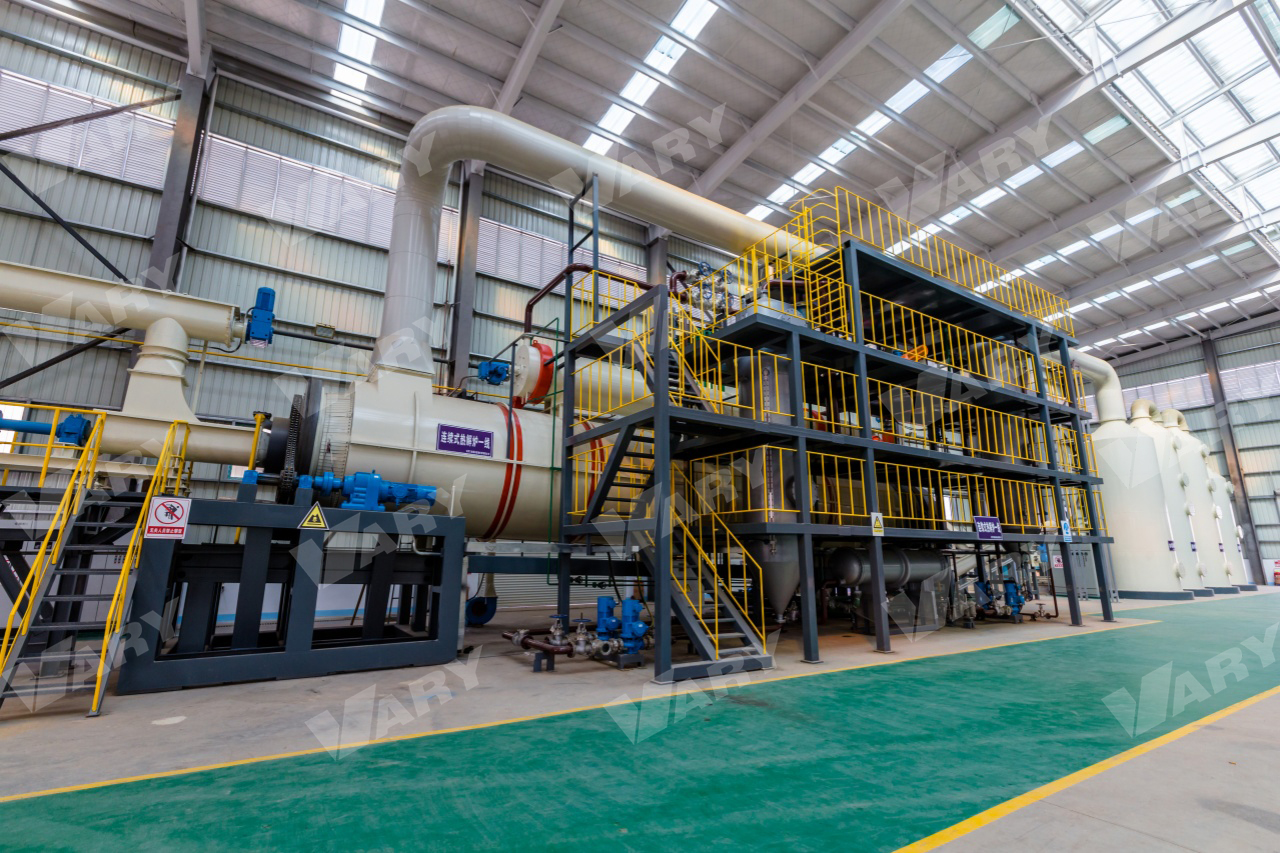
Drawing on Vary Tech's existing pyrolysis industrial practice and trial-application experience, the technology is applicable to diverse organic solid-waste streams including waste tyres, waste plastics, oil-bearing wastes, waste packaging materials, waste activated carbon, waste filter media, distillation residues, organic resins, certain pharmaceutical and chemical process wastes, and biomass.
Nevertheless, some waste streams are unsuitable or demand extreme caution for pyrolysis: high-chlorine-content wastes, high-moisture/low-organic-matter wastes, highly reactive or explosion-prone wastes, and wastes carrying high levels of volatile heavy metals such as mercury and cadmium where pollutant-migration control is difficult.
For highly complex mixed hazardous-waste streams and wastes lacking stable resource-recovery outlets, mature incineration technology still plays an important—sometimes irreplaceable—role.
Medical waste streams require case-by-case evaluation. Incineration offers broad applicability, yet proven non-incineration routes such as high-temperature steam sterilisation, chemical disinfection and microwave disinfection are also available in China. One cannot simply claim that "medical waste can only be incinerated."
The true positioning of pyrolysis, therefore, is not to "replace incineration" outright, but rather:
to divert organic wastes suitable for material recycling away from mere end-of-life disposal into higher-value material-circulation pathways, while incineration continues to serve as the fallback-disposal technology for complex wastes unsuitable for resource recovery.
Policy and Market Trends: From "Disposal Capacity Availability" to "High-Quality Utilisation"
From a policy perspective, China's solid-waste governance does not represent a simple shift from incineration toward pyrolysis. Instead, under the principles of volume reduction, resource recovery and hazard elimination, policy aims to raise overall resource-circulation performance.
The State Council's 2026 Comprehensive Action Plan for Solid Waste Pollution Control explicitly mandates building a system covering source reduction, in-process control, end-of-life utilisation and full-chain hazard-free management. It further promotes circular-economy development and technical innovation for key recyclables including waste plastics and waste tyres.
Policy guidance within the hazardous-waste sector is evolving from merely supplementing disposal capacity toward optimising capacity structure, tightening project admittance rules and boosting resource-recovery performance. Public information released by the Ministry of Ecology and Environment in 2025 indicates that national aggregate hazardous-waste treatment capacity can basically satisfy domestic demand. Policies further stress optimising disposal-method portfolios and minimising landfilling volumes.
Regulators have grown more prudent about approving new capacity-surplus hazardous-waste projects in regions with ample existing disposal infrastructure. For example, Liaoning provincial planning imposes strict approval restrictions on new hazardous-waste projects that add redundant capacity.
This means future competitive emphasis will gradually shift from:
"Who owns larger disposal capacity"
to:
"Who can deliver treatment with lower costs, higher resource-recovery rates, stable product quality and reduced environmental risk."
This creates genuine market opportunities for pyrolysis technology.
Simultaneously, advancing downstream markets for waste plastic chemical recycling, Recovered Carbon Black, biochar and circular chemical feedstocks are unlocking new value potential for pyrolysis-derived products.
It must be emphasised that the low-carbon credentials of pyrolysis cannot be judged solely from its process label. Assessment must rely on Life-Cycle Assessment (LCA) , taking into account feedstock provenance, energy consumption, product-substitution effects and ultimate carbon-fate pathways.
Where pyrolysis oil displaces virgin petrochemical feedstocks to manufacture new chemical products, or where recycled carbon-based materials effectively replace virgin counterparts, carbon-reduction benefits are more readily realised. By contrast, if final products are simply combusted for fuel, circular-economy and carbon-abatement benefits are substantially diminished.
Incineration and Pyrolysis Each Have Their Place—the Future Belongs to "Graded Disposal by Waste Quality"
Incineration and pyrolysis are not mutually exclusive competing alternatives. They are technical routes assigned distinct functions according to waste characteristics.
Incineration's strengths lie in maturity, stability and broad applicability, acting as a vital fallback-disposal technology for hazard-free treatment of complex wastes. Pyrolysis's strength lies in converting certain high-organic-content wastes from pure disposal streams into marketable oil, gas and carbon-rich recycled products.
The more logical future development direction, therefore, is not a simplistic "incineration versus pyrolysis" debate, but building a graded-disposal system tailored to feedstock properties and product-value potential:
-
Wastes suitable for material circularity→ prioritise high-value resource recovery;
-
Wastes fit for pyrolysis→ recover oil/gas/carbon resources via pyrolysis;
-
Wastes hard to recycle with high environmental risk→ adopt proven technologies such as incineration for safe disposal.
For disposal enterprises, building dedicated pyrolysis capacity for specific waste streams alongside conventional incineration infrastructure represents an extension of business scope from pure "disposal-service provider" toward "recycled-product manufacturer."
For investors, the key question is not merely "whether pyrolysis represents a future-proof trend," but a more concrete one:
Can this project reliably convert low-value—even negative-tipping-fee—waste into finished products that satisfy downstream specifications and support long-term sales?
Only when the answer is affirmative does the true commercial value of pyrolysis hold.
If you are evaluating the pyrolysis feasibility of specific feedstocks, Vary Tech operates a specialised pyrolysis-process laboratory. We can perform systematic assessment covering oil yield, product composition, pollutant migration, energy consumption and continuous-run stability through feedstock characterisation, bench-scale trials, pilot-scale scaling-up and product testing, and deliver custom-tailored process packages and system-solution offerings accordingly.


