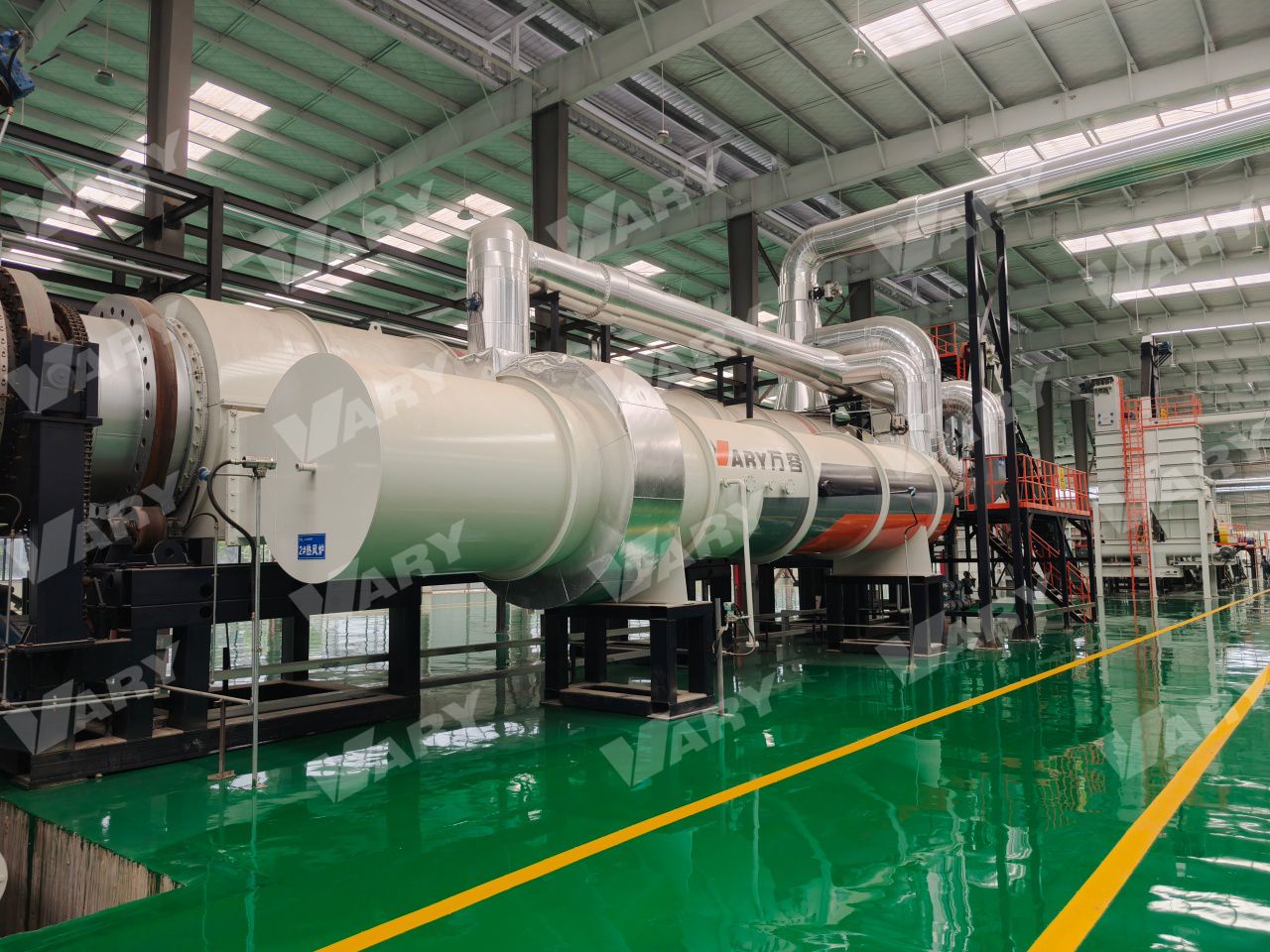
Most insiders know the main route of pyrolysis: pretreatment and feeding → pyrolysis → oil and gas extraction and fractional condensation → non-condensable gas purification and reuse → solid residue cooling and discharge, all paired with heating, flue gas treatment, and intelligent control systems. Thus, a voice often echoes in the market: "Pyrolysis isn't a new thing; anyone can do it."
Admittedly, pyrolysis processes are largely similar. However, a massive engineering gap exists between "occasionally extracting oil from pyrolysis" and "continuous operation year after year without coking or pipe blockages, with controllable unit processing energy consumption and stable solid product quality." Not every continuous pyrolysis production line can operate stably for over 8,000 hours a year, nor do all pyrolysis facilities feature active anti-coking or decoking designs. Recovering oil is not just simple extraction; it requires precise temperature control to achieve efficient gas, liquid, and solid separation while reducing the probability of polymerization. This improves oil quality and recovery rates, effectively preventing re-polymerization from generating tar that blocks pipelines.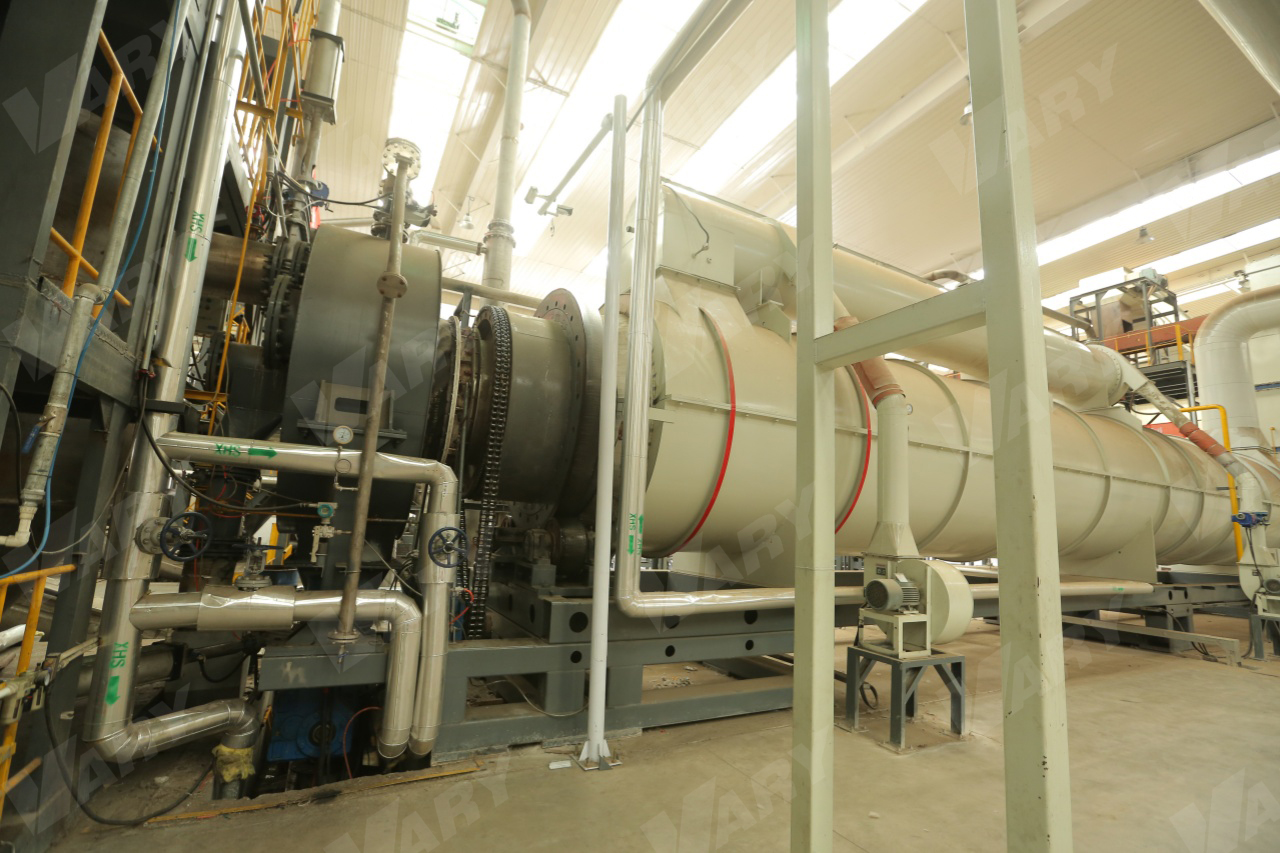
Many visiting clients stare at the cylinder of the pyrolysis furnace for a long time, but what ultimately helps them make their decision is often our multi-layer composite sealing structure at the feeding and discharging ends. This structure is the starting point of Vary Tech's design.
To the layman, it's just a ring of flanges and packing; to the expert, it is the lifeline of the "oxygen-free environment" for the entire continuous pyrolysis production line. To firmly keep the system's oxygen content below the design red line under conditions of high furnace radiation, oil vapor erosion, and solid materials, Vary Tech provides not just simple packing, but a complete, customized protection system:
Supporting this system are numerous granted invention patents and utility model patents centered around rotary sealing, sealed conveying, and thermal expansion compensation.
This single seal determines whether the continuous pyrolysis line can truly maintain an oxygen-free state, whether sealing materials require frequent replacement, and whether the maintenance and replacement cycles of the sealing system can be significantly extended. It also dictates whether operators can comfortably monitor instruments or must remain constantly on edge. This is exactly how Vary Tech's combined flexible seal for continuous pyrolysis equipment solves the high-temperature oil and gas sealing dilemma between the large-diameter rotary kiln body and the fixed tail cover. We do not just promise "it can pyrolyze"; we deliver "long-term, safe, and stable pyrolysis."
Some clients look at the rotary kiln structure of the pyrolysis furnace and say, "Isn't this just a rotating kiln with heating?" The simplified structural drawings do show cylinders, riding rings, support rollers, and drive mechanisms—but the real difference becomes starkly apparent the moment heating begins with a load.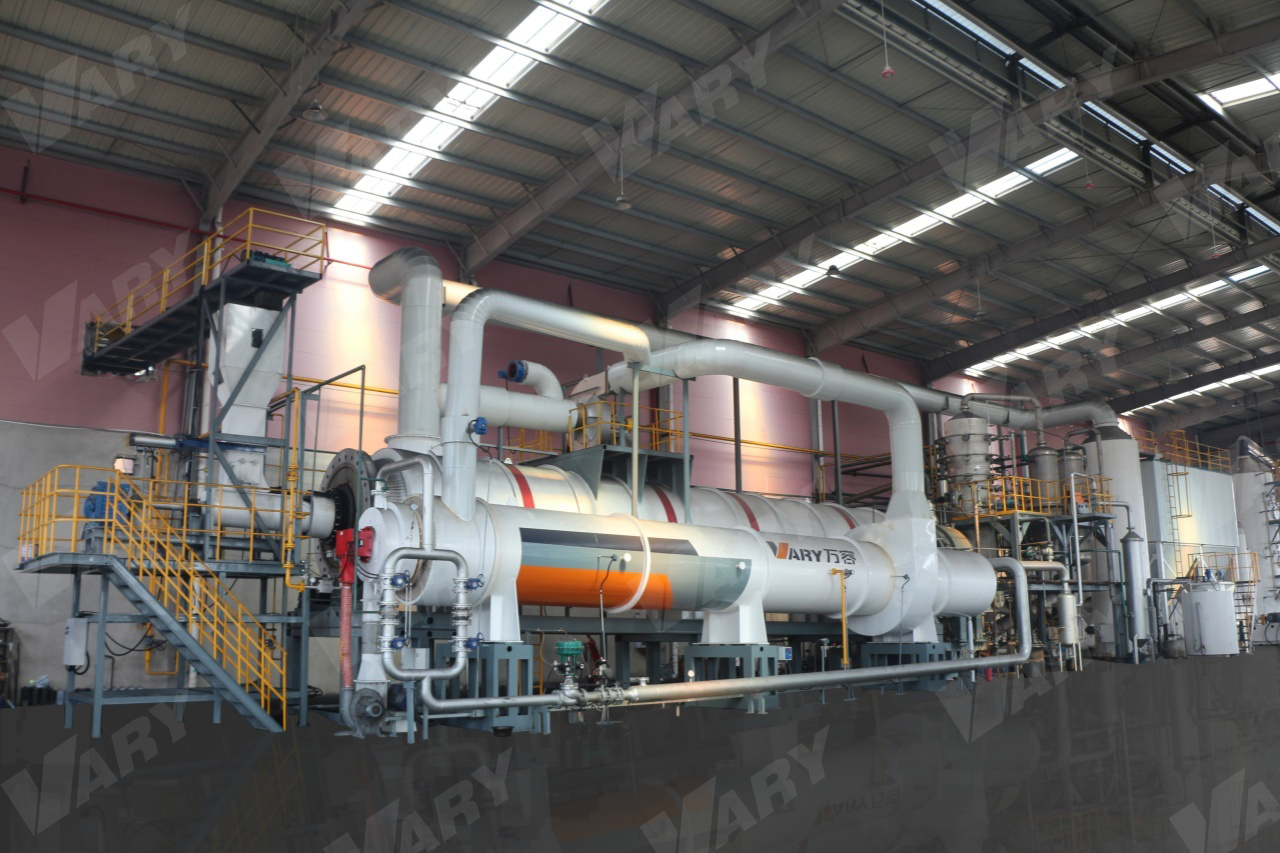
In Vary Tech's view, the pyrolysis furnace is a carrier that accomplishes heat transfer, reaction, conveying, and self-cleaning during continuous rotation.
Vary Tech's continuous pyrolysis is like a precise production line that takes in raw materials and delivers perfectly processed output—ensuring every batch is neither burnt nor undercooked, while the system remains completely sealed. We have refined the rotary kiln oxygen-free pyrolysis into a continuously controllable reaction carrier that actively suppresses coking and maintains overall system tightness, iterating it all the way to industrial-grade reliability.
This achievement is not born from a single accidental breakthrough, but from long-term engineering validation, on-site iteration, and continuous optimization. Extensive operating experience under different materials, loads, and working conditions has ultimately crystallized into replicable, deliverable engineering capabilities.
Achieving this level is challenging enough—and more than sufficient to make us the client's repeated choice.
Another easily underestimated aspect of the pyrolysis production line is oil-gas condensation and non-condensable gas reuse. Many people think it simply involves cooling the high-temperature oil and gas, separating the oil and water, and burning off the gas.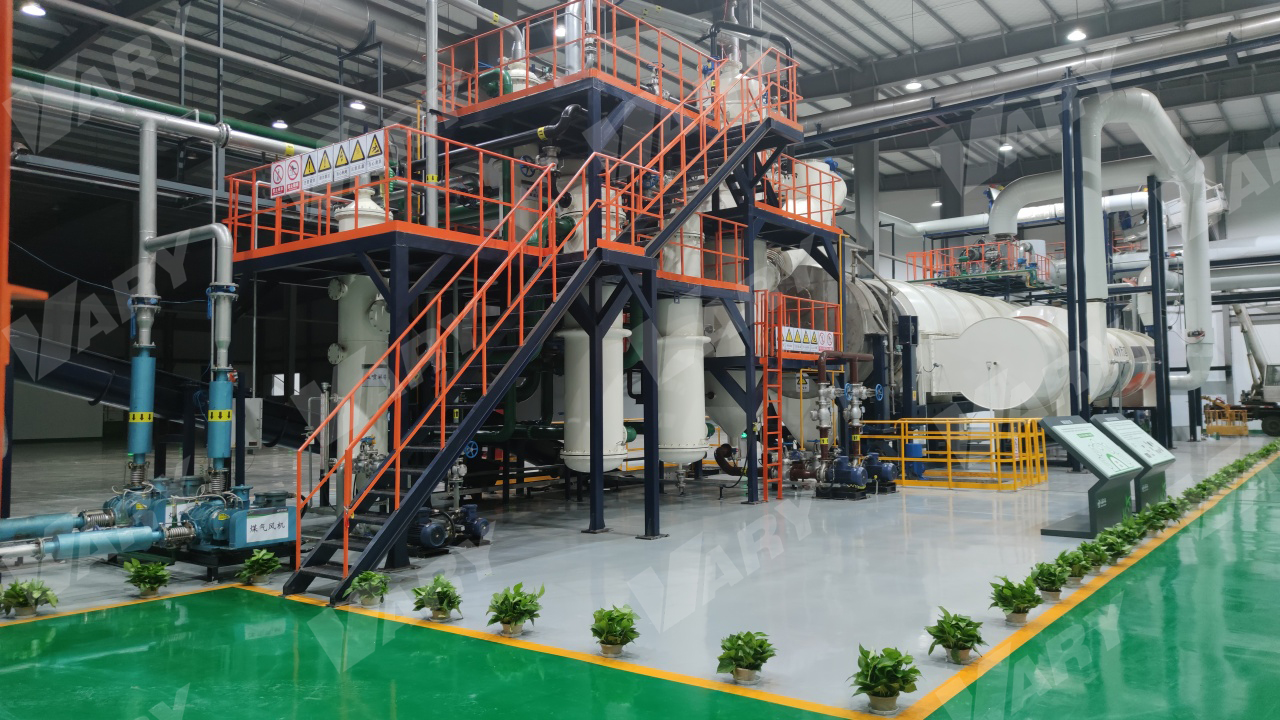
But Vary Tech pursues the ultimate in fractional recovery and closed-loop energy utilization:
Total system tightness and oxygen control stand guard from the oil-gas outlet to the condenser and non-condensable gas buffer tank, leaving absolutely no pathways for air.
When clients see pyrolysis oil flowing steadily, non-condensable gas continuously providing energy to the burners, and the entire continuous pyrolysis line's dependence on external fuel significantly dropping, they understand that Vary Tech's pyrolysis-based resource recovery represents a concrete calculation in energy utilization efficiency, laying the foundation for future emission reduction accounting.
At Vary Tech, process safety and environmental control are not external attachments to the equipment; they are safeguards built directly into the system.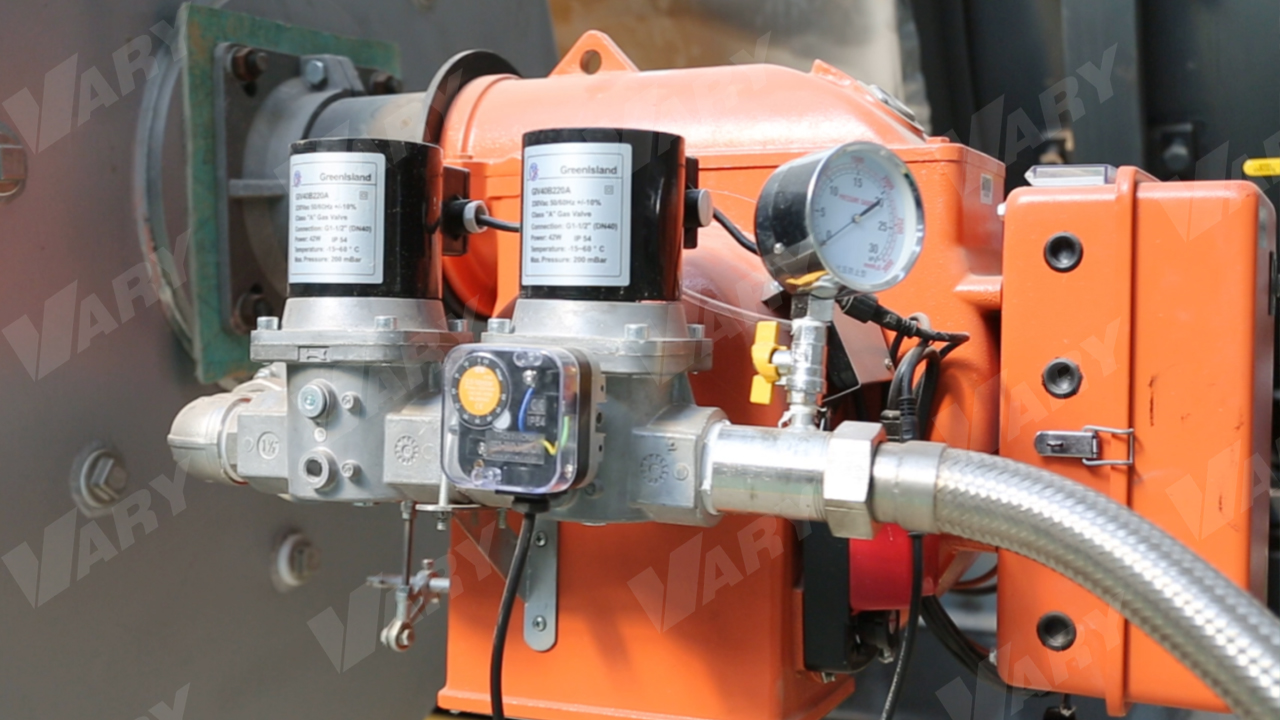
We select high-temperature and corrosion-resistant specialty products for all key valves, including pyrolysis gas control valves, air bypass valves, flue gas reuse valves, venting valves, and non-condensable gas discharge valves. Safety relief devices like bursting discs and pressure relief valves are strictly chosen from reliable industrial-grade brands—ensuring every component can withstand long-term safe operation under oil vapor and combustible gas conditions.
Elevating "oxygen-free" from a slogan into a habit—automatically maintained by machines, continuously verified by instruments, and strictly followed by personnel—is the true mark of an industrialized pyrolysis line.
Whether a pyrolysis production line can operate stably over long cycles often depends not only on the main pyrolysis furnace but also on the coordinated control of all modules.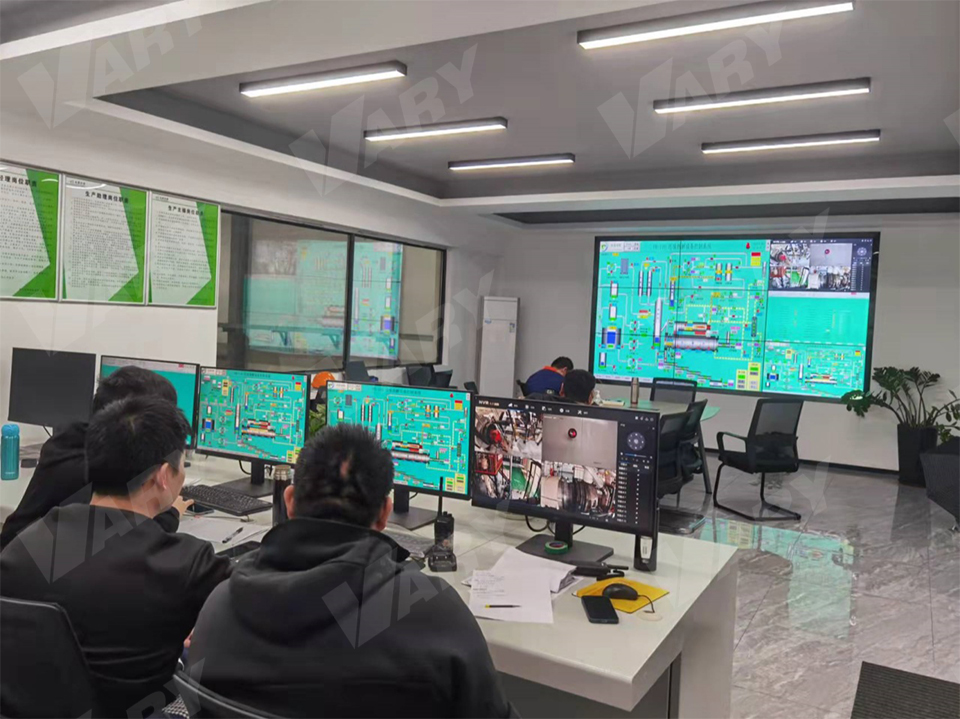
Vary Tech's fully automated intelligent control system for pyrolysis lines is loaded with robust process logic:
A good system doesn't need constant watching; a bad system can't be watched enough. A good system isn't completely unmonitored; rather, it does not rely on individual experience to maintain stability.
Executable drying curves, convergent feeding parameters, interlockable abnormal conditions, and traceable operating data—this is the true closed loop of control and safety.
Processes are an industry consensus; details are corporate differentiators.
"Long-cycle, quantifiable, and reproducible" is far more important than "looking high-end."
Truly advanced pyrolysis technology and equipment are built on the hardest, most unglamorous work in areas unseen by others: oil-gas sealing, flue gas sealing, anti-coking, and maintaining oxygen-free conditions.
Many have seen numerous continuous pyrolysis production lines, but only by getting close to the sealing surfaces to feel the micro-pressure of the air curtain, or using portable analyzers to check every flange point for trace fugitive emissions, can one truly understand the underlying engineering benchmark.
When the main pyrolysis furnace seal is no longer simple packing, but a composite gas seal and thermal compensation system; when pyrolysis oil no longer carries carbon dust, but flows cleanly; when a continuous pyrolysis furnace transitions from "can extract oil" to "stably extracts good oil year after year"—the advanced nature of Vary Tech's continuous oxygen-free pyrolysis technology and equipment has already been etched into every temperature control loop, every sealing interface, and every silent oxygen-free promise.
This is Vary Tech's continuous oxygen-free pyrolysis production line: a complete delivery from design to industrialization, and from blueprints to trust.

