Vary Tech collaborates with research teams from Changsha University of Science and Technology to address key issues in organic solid waste treatment and resource utilization through molecular dynamics simulation, promoting high-quality green industrial development.
Recently, research teams from Changsha University of Science and Technology, Hunan Institute of Engineering, and CRRC (China Railway Rolling Stock Corporation) experts visited Vary Tech. They held productive discussions with technical representatives from Vary Tech’s Research and Design Institute on how to leverage advanced technologies such as molecular dynamics simulation to address key bottlenecks in the treatment and resource utilization of organic solid waste, and promote high-quality and green industrial development.
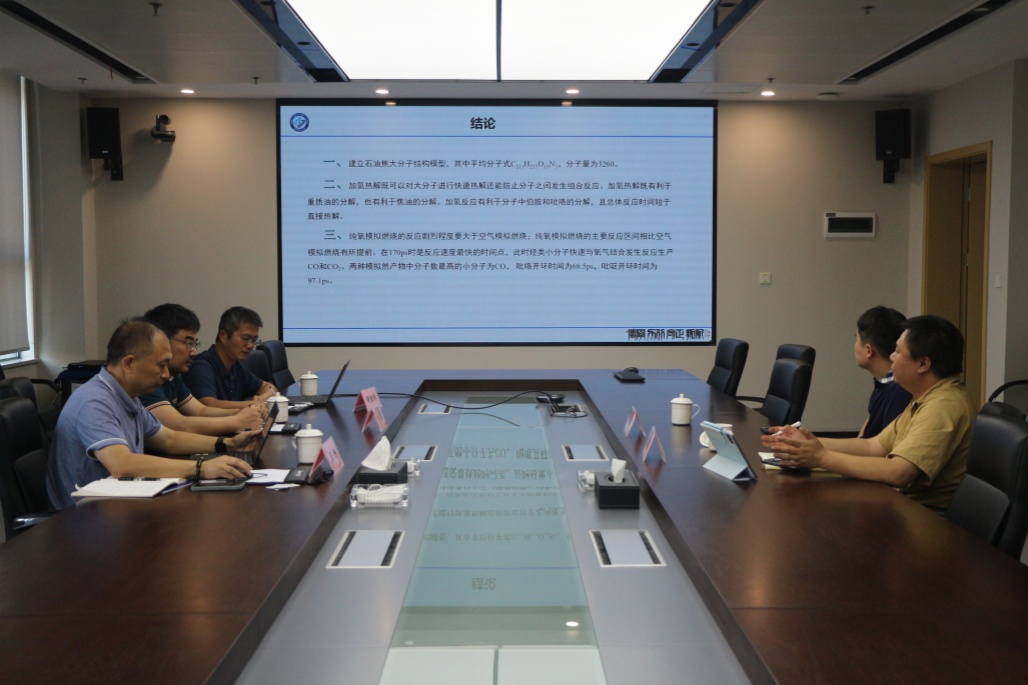
The exchange focused on integrating cutting-edge molecular simulation technologies from universities with specific challenges encountered by Vary Tech in solid waste resource utilization practices. Associate Professor He Jinqiao from Changsha University of Science and Technology, Professor Liu Bo from Hunan Institute of Engineering, and Senior Engineer Zhou Sheng (professor-level) from CRRC Zhixing Technology Co., Ltd., respectively introduced their teams’ latest progress in the field of molecular simulation and computational chemistry. They highlighted the application of the ReaxFF reactive force field in simulating the pyrolysis and combustion processes of macromolecular materials (e.g., petroleum coke). This technology can track key reactions such as chemical bond breaking and formation, and pollutant conversion pathways in real time at the microscopic level, with a time resolution of up to picosecond (ps)-level, providing solid theoretical support for process optimization and mechanism research.
Zuo Zhiyue, Dean of Vary Tech’s Research and Design Institute, and Song Zhen, Marketing Director, expressed high recognition for the universities’ research achievements. Based on Vary Tech’s pyrolysis technology practices in the treatment of decommissioned wind turbine blades, waste plastics, waste tires, and biomass, they proposed several potential collaboration directions, including practical needs such as improving the quality of pyrolysis products, preventing equipment corrosion during the treatment of specific materials, and extending service life. They hoped to achieve lean process optimization through microscopic mechanism research.
The meeting systematically sorted out the core technical bottlenecks currently facing organic solid waste resource utilization and clarified key paths for future cooperation. Participants agreed that the basic simulation capabilities of universities and the industrialization capabilities of enterprises are highly complementary:molecular simulation can provide microscopic mechanism explanations and process guidance for complex organic solid waste treatment systems, while Vary Tech’s practical scenarios can serve as a verification platform for simulation results and put forward clear research directions.
Current industry pain points are not only technical challenges but also contain huge market opportunities. The results of this cooperation will not only help enterprises break through development barriers but also promote technological iteration in the entire industry, setting a good example for the in-depth integration of "industry, academia, and research".
Through the close integration of theoretical innovation and engineering practice, Vary Tech and university research teams are expected to jointly open up new paths for high-value and green treatment of organic solid waste, injecting new impetus into the sustainable development of the industry.


