Large quantities of oil-bearing sludge are generated during oilfield production, petroleum refining, storage and transportation, and mechanical processing. This type of sludge typically contains petroleum hydrocarbons, sand, metals, and other impurities, and the oil content of some oil sludge can reach 10%–50%. Under China's current hazardous-waste management system, various types of oil-bearing sludge generated from petroleum refining, oily wastewater treatment, and other processes are included in the management scope of HW08 — Waste Mineral Oils and Wastes Containing Mineral Oils. However, the specific classification must still be determined according to the source of generation and the corresponding code in the National Catalogue of Hazardous Wastes.
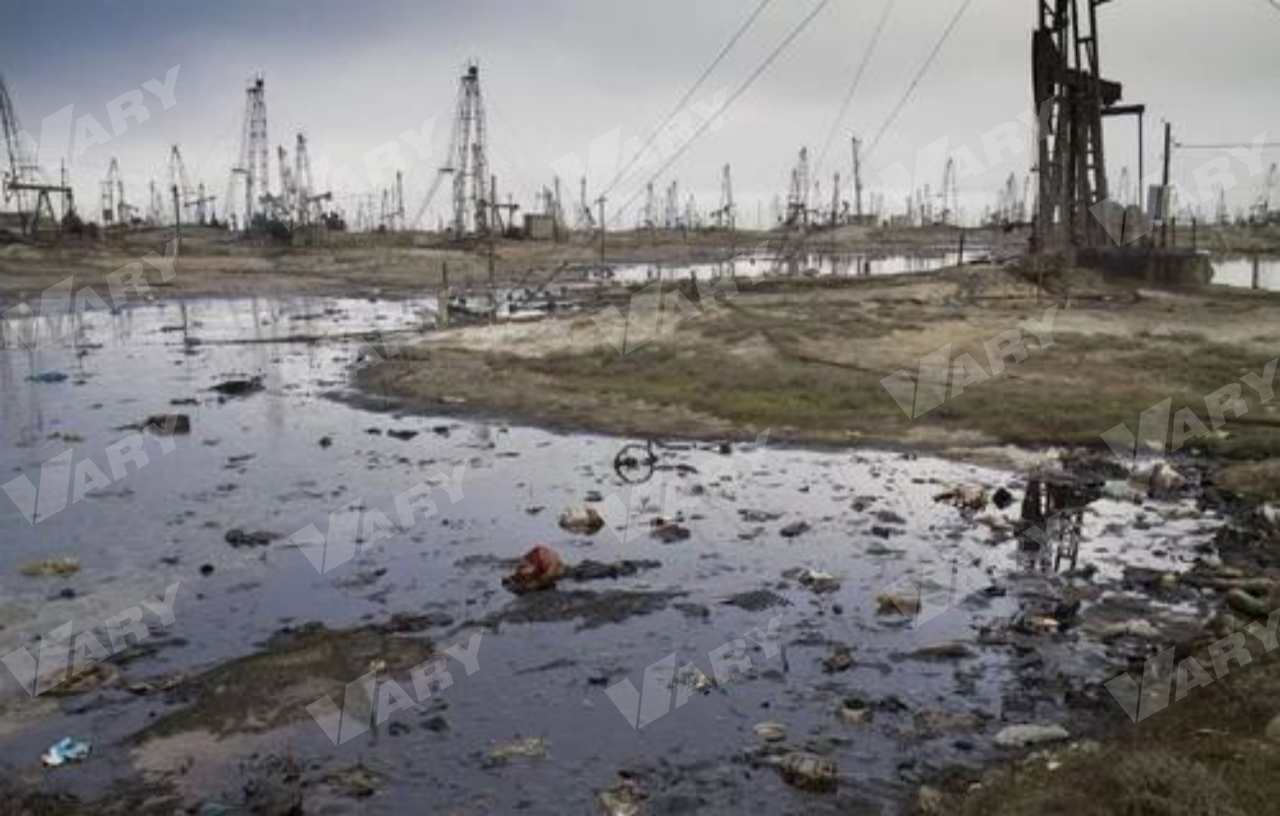
If improperly disposed of, the petroleum hydrocarbons and other pollutants contained in oil sludge may contaminate soil, groundwater, and the surrounding environment. On the other hand, oil sludge still contains a certain proportion of recoverable oil components. It is therefore both a pollutant that requires regulated disposal and an oil-bearing solid waste with potential for resource recovery.
How can the oil components be safely and efficiently recovered while achieving waste reduction, resource recovery, and compliant disposal?
Pyrolysis is a thermochemical treatment technology in which organic components are decomposed through heating under oxygen-free or near-oxygen-free conditions, producing oil, gas, and solid residues. For oil-bearing sludge, its value is primarily reflected in oil and gas recovery, waste reduction, stabilization of residues, and their potential for subsequent resource utilization. Whether the solid residues generated by pyrolysis can be further used as general industrial raw materials must still be determined in accordance with applicable laws and regulations based on their properties, pollutant indicators, the project's environmental impact assessment (EIA), and relevant utilization standards. It cannot simply be assumed that the residues are "harmless after pyrolysis."
When preparing to build an oil-sludge pyrolysis project, one unavoidable question is:
Should you choose batch-type pyrolysis equipment, or should you directly build a continuous pyrolysis production line?
These two options are by no means simply a choice between a "small furnace" and a "large production line." They represent different process principles, investment approaches, and operating models.
Below, we systematically compare the two processes from seven dimensions: process principles, feeding and residue discharge, energy consumption and efficiency, material adaptability, oil-product stability, investment costs, and operation and maintenance.
What Is the Difference Between Batch-Type and Continuous-Type Oil-Sludge Pyrolysis?
Batch-Type Oil-Sludge Pyrolysis: Batch Processing with Flexible Adaptability
Batch-type pyrolysis typically uses horizontal vessel-type or rotary reaction equipment equipped with an external heating system.
Its basic process is:
Loading → Sealing → Heating → Pyrolysis → Holding → Stopping Heating → Cooling → Centralized Residue Discharge → Next Batch
The entire pyrolysis process operates cyclically, one batch at a time.
The key feature of this "batch-by-batch" processing mode is that each batch can be controlled as a relatively independent reaction unit.
For oil sludge from different sources and with different oil content, moisture content, and solids content, process parameters such as the heating rate, pyrolysis temperature, and holding time can be adjusted separately.
At the same time, because each production cycle includes a shutdown and centralized residue-discharge stage, the equipment interior can be inspected and cleaned more easily.
Therefore, when handling oil sludge with high solids content, high viscosity, a high level of impurities, or significant fluctuations in feedstock properties, batch-type equipment generally provides greater operating flexibility.
Continuous-Type Oil-Sludge Pyrolysis: Continuous Operation for Scale and Stability
Continuous-type pyrolysis typically uses equipment such as horizontal rotary kilns and screw-propelled reactors, together with continuous sealed feeding, continuous residue discharge, and oil-and-gas condensation systems.
Materials continuously enter the pyrolysis reactor through screw conveyors, piston feeders, or other enclosed conveying devices while minimizing air ingress.
After entering the reactor, the material slowly moves toward the discharge end as the reactor rotates or as the internal conveying mechanism operates. During this process, the material is continuously heated and undergoes pyrolysis.
The resulting pyrolysis oil and gas are continuously discharged into the condensation system, while solid residues are continuously discharged from the other end.
Compared with batch-type processes, the core objectives of continuous-type processes are:
Stable feeding, stable temperature, stable residence time, and stable output.
Their advantages are that, under long-term steady-state operation, they can more readily achieve effective heat integration and higher equipment utilization. At the same time, however, they impose higher requirements on feedstock pretreatment, homogenization, and the sealing systems for feeding and discharge.
When the moisture content, viscosity, solids content, or proportion of large impurities in oil sludge fluctuates significantly, the risks of conveying difficulties, material adhesion, coking, wear, and even blockage may increase. Continuous systems therefore generally require a more comprehensive pretreatment system. Technical specifications for the pyrolysis of solid waste likewise emphasize that appropriate crushing, sorting, and homogenization can help improve pyrolysis efficiency and system operating stability.
Hard-Core Comparison of Batch-Type and Continuous-Type Oil-Sludge Pyrolysis
|
Comparison Item
|
Batch-Type Pyrolysis Equipment
|
Continuous-Type Pyrolysis Equipment
|
|
Processing Scale
|
Relatively small capacity per unit; multiple units can be installed in parallel
|
More suitable for medium- and large-scale continuous processing
|
|
Feeding / Residue Discharge
|
Batch loading and centralized residue discharge
|
Continuous sealed feeding and continuous residue discharge
|
|
Energy Consumption Characteristics
|
Heat storage losses occur due to periodic heating and cooling
|
Steady-state operation is more conducive to heat recovery and system heat integration
|
|
Sealing Method
|
Primarily static sealing during pyrolysis; strict safety control is required during loading and residue discharge
|
Relies on a continuous dynamic sealing system, resulting in higher technical complexity
|
|
Material Adaptability
|
Generally more suitable for materials with high solids content, high viscosity, more impurities, and greater fluctuations
|
Relatively higher requirements for particle size, moisture content, flowability, and homogenization
|
|
Oil-Product Stability
|
Some variation may occur between different batches
|
More likely to maintain consistent and stable output under stable feedstock and operating conditions
|
|
Investment Characteristics
|
Relatively low investment per unit; can be expanded in stages
|
Higher initial investment, but more advantageous unit treatment costs can be achieved at larger scales
|
|
Maintenance and Operation
|
Easy furnace cleaning, but more frequent loading and unloading operations
|
High level of automation, but maintenance organization is more complex when failures occur in the continuous system
|
The details are discussed below.
Processing Scale and Capacity Flexibility
The processing capacity of a single batch-type unit is usually relatively small, but its advantages lie in modularity and flexible start-up and shutdown.
For example, a project can initially be equipped with two units and then add more units as the feedstock supply increases. When the feedstock supply decreases, the number of operating units can also be reduced.
Therefore, if the amount of oil sludge generated has a clear periodic pattern — for example, oil sludge generated during tank cleaning or scheduled maintenance — batch-type equipment is often more flexible.
Continuous-type equipment is more suitable for long-term, stable, large-scale feedstock supplies.
Once the feedstock volume reaches several tens or even hundreds of tonnes per day, the advantages of continuous operation in terms of equipment utilization, automation, and unit treatment cost gradually become more apparent.
Taking Vary Tech's existing equipment and project specifications as an example, a single set of continuous oil-sludge pyrolysis equipment can have a designed processing capacity of up to 240 tonnes per day, while a single set of batch-type pyrolysis equipment can process approximately 18 tonnes per day. Actual processing capacity is also affected by factors such as the moisture content, solids content, bulk density, pretreatment method, and operating time of the oil sludge.
Therefore:
Small-scale feedstock with significant fluctuations is more suitable for consideration of batch-type systems, while stable large-scale feedstock is more suitable for consideration of continuous-type systems.
Feeding, Residue Discharge, and Sealing: The Real Technical Divide Between the Two Processes
Feeding and residue discharge are among the areas with the greatest differences between batch-type and continuous-type equipment.
Batch-type equipment generally involves centralized loading before the production cycle begins, followed by centralized residue discharge after pyrolysis is completed and the equipment has undergone safe cooling.
Because material does not need to be continuously added to the furnace during pyrolysis, the sealing structure required during high-temperature operation is relatively simple.
However, it should be emphasized that:
"Batch-type equipment does not require sealing" is incorrect.
Regardless of whether pyrolysis equipment is batch-type or continuous-type, it must maintain good sealing performance during the pyrolysis stage to prevent air from entering the reaction system and to prevent pyrolysis oil and gas from leaking.
Relevant technical guidelines issued by China's Ministry of Ecology and Environment clearly require pyrolysis equipment to have good sealing performance and to prevent the leakage of pyrolysis gases.
The specific risks associated with batch-type equipment mainly occur during furnace opening, loading, and residue discharge. If the furnace temperature remains high or combustible material remains in the residues, premature exposure to air may cause oxidative heating or even localized combustion. Therefore, strict conditions for cooling, gas replacement, and furnace-opening interlocks must be established.
Continuous-type equipment is different.
To achieve continuous production, the equipment must continuously complete:
Feeding → Pyrolysis → Residue Discharge
while maintaining the furnace chamber in a relatively enclosed condition.
This requires the use of screws, piston feeders, gas-lock devices, and multi-stage sealing structures to solve the problem of maintaining enclosure while the equipment and material are in motion.
This is also one of the key technical barriers of continuous pyrolysis equipment.
Taking Vary Tech as an example, its continuous pyrolysis equipment uses structures such as combined flexible sealing systems to maintain the airtightness of the pyrolysis system while achieving continuous feeding and continuous discharge.
Its batch-type equipment is likewise equipped with corresponding sealing systems to ensure isolation and sealing safety between the oil-and-gas side and the heating-flue-gas side.
Energy Consumption: The Difference Between Cyclic Heating and Cooling and Steady-State Operation
From the perspectives of thermodynamics and engineering operation, continuous equipment generally has an easier time achieving a stable thermal balance.
Batch-type equipment must undergo the following stages in each production cycle:
Cold or low-temperature state → Heating → Pyrolysis → Holding → Cooling
As a result, the furnace body and internal components repeatedly store and release heat, creating a certain amount of periodic heat loss.
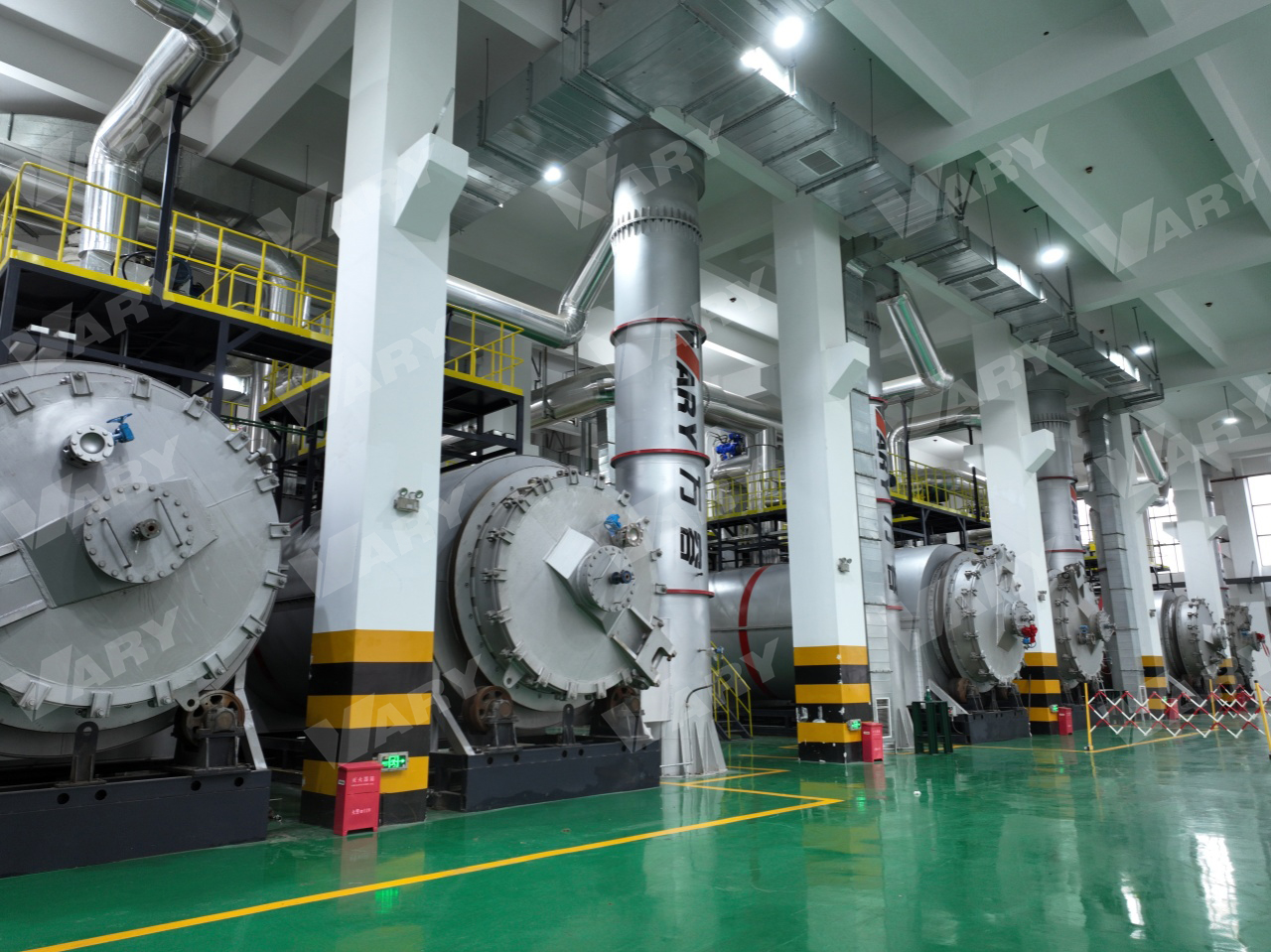
Once continuous equipment reaches normal operating conditions, the furnace body and material system remain near the operating temperature for extended periods. This makes it easier to recover waste heat from flue gas, reuse non-condensable gas, and achieve heat integration between materials. Therefore, when the feedstock characteristics and operating scale are properly matched, continuous equipment generally has an advantage in terms of unit energy consumption.
However, this advantage should not be simplistically expressed as a fixed figure such as "20%–30% energy savings" or "thermal efficiency above 90%."
Actual energy consumption depends on:
Moisture content of the oil sludge;
Oil content;
Feedstock temperature;
Pyrolysis temperature;
Furnace insulation;
Heating value of non-condensable gas;
Flue-gas waste-heat utilization;
Equipment load factor.
In particular, when the moisture content of oil sludge is high, a large amount of energy is first consumed in water evaporation. Feedstock dewatering and pretreatment are often more important than simply comparing furnace types.
Batch-type systems can likewise improve overall energy utilization through proper energy scheduling.
For example, in a Jiangsu oil-sludge pyrolysis project served by Vary Tech, the production cycles of multiple batch-type units can be staggered to achieve coordinated utilization of non-condensable gas between different furnace groups.
When Furnace A enters a high-gas-production stage while Furnace B is in the heating stage, excess non-condensable gas from Furnace A can be sent to the heating system of Furnace B for combustion and heat supply. The different units can therefore operate in a staggered manner, reducing external fuel consumption.
This is also an important system optimization method for parallel operation of multiple batch-type units.
Material Adaptability: Which Process Can Better "Handle Tough Feedstock"?
This is one of the most obvious advantages of batch-type equipment.
Oil sludge in actual engineering applications is not as homogeneous as laboratory samples.
For example:
Oil sludge collected from the ground may contain rocks, sand, soil, and other debris;
Tank-cleaning sludge may form highly viscous or even block-like deposits;
Moisture content, oil content, and solids content may vary significantly between different batches;
Some materials may also contain metal components, fibers, or other large foreign objects.
If such materials are fed directly into a screw-based continuous feeding system, the risks of material jamming, wear, and unstable conveying may increase.
Because batch-type equipment does not rely on complex continuous conveying mechanisms, it generally has a higher tolerance for variations in feedstock particle size and flowability.
As long as the material can be safely loaded, many materials that are difficult to convey continuously can still be processed in the furnace and centrally cleaned after completion of the batch.
Therefore, some integrated hazardous-waste treatment projects retain batch-type equipment to process complex materials that are unsuitable for direct treatment by continuous production lines.
However, this does not mean that:
Complex oil sludge cannot be processed continuously.
Through crushing, screening, impurity removal, dewatering, homogenization, conditioning, and appropriate feed-system design, the feedstock adaptability of continuous pyrolysis equipment can likewise be significantly expanded.
In other words:
Batch-type systems rely more on the inherent "tolerance" of the equipment, whereas continuous-type systems rely more on "pretreatment + stable feeding + process control" to address complex feedstock conditions.
Oil Quality and Stability
The quality of pyrolysis oil depends first on the feedstock and only then on the equipment configuration.
The source of the oil sludge, oil composition, moisture, metals, and ash content all affect the final oil product. Therefore, it cannot simply be assumed that "continuous-type pyrolysis oil is always of higher quality than batch-type pyrolysis oil."
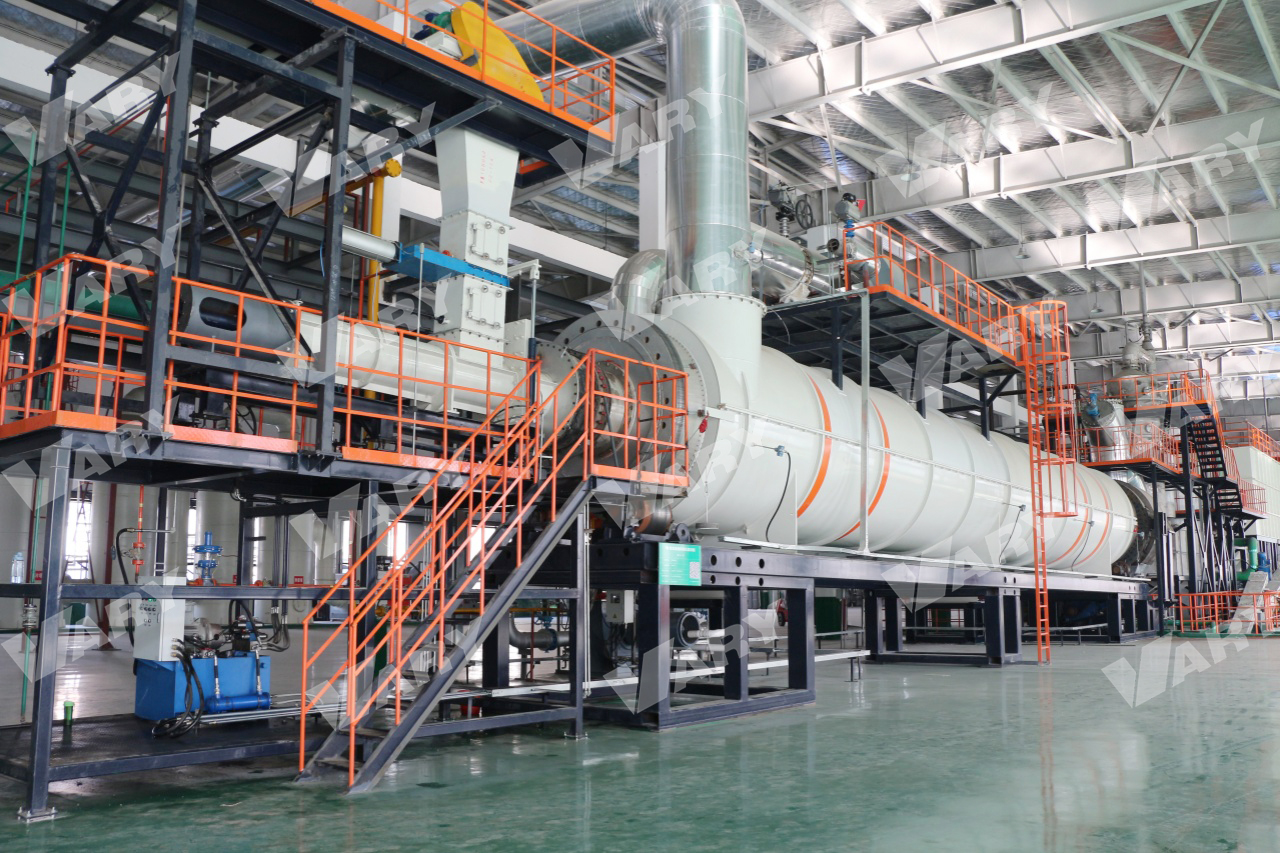
The real advantage of continuous equipment is that, with stable feedstock, it is easier to maintain a stable thermal history and residence time.
After continuous feeding begins, the reaction temperature, material residence time, oil-and-gas residence time, and condensation conditions can all be maintained within relatively stable ranges over an extended period. As a result, the properties of the oil produced at different times are generally more consistent.
Batch-type equipment, by contrast, must undergo a complete heating process.
Within a single batch, the composition of the generated oil and gas may vary between different stages. Between different batches, changes in feedstock, heating rate, and operating procedures may also result in some variation in oil quality.
Through automated heating curves, temperature-programmed control, and standardized operating procedures, the product stability of batch-type equipment can likewise be significantly improved.
Therefore, if the pyrolysis oil is primarily used in subsequent fuel applications, the tolerance for batch-to-batch variation may be relatively high, provided that the applicable product-quality and environmental requirements are met.
If further fractionation, refining, co-processing, or entry into a chemical-processing system with stringent feedstock requirements is required, a continuous and stable oil product is generally more conducive to subsequent process control.
Investment and Payback Period
The major commercial advantage of batch-type equipment is its lower investment threshold and the ability to implement projects in stages.
Depending on equipment capacity, materials, automation level, condensation system, off-gas treatment, and environmental and safety configurations, the investment in a batch-type pyrolysis system may range from several hundred thousand yuan to several million yuan.
A company can initially build one or two units to validate the source of the oil sludge, operating costs, oil recovery rate, and business model, and then expand the system as required.
A continuous pyrolysis production line, by contrast, is a complete system engineering project.
In addition to the main pyrolysis furnace, it typically requires:
Feedstock pretreatment;
Continuous sealed feeding;
Continuous residue discharge;
Oil-and-gas condensation;
Non-condensable gas utilization;
Flue-gas treatment;
Automated control;
Safety interlock systems.
Therefore, the total investment typically reaches several million yuan or even tens of millions of yuan.
The advantage of continuous systems does not lie in the equipment being "cheap." Rather, once the processing scale reaches a certain level, higher equipment utilization, reduced labor requirements, and lower unit energy consumption can reduce the cost per tonne processed.
Therefore, the real question should not be:
How much does one furnace cost?
It should be:
What is the comprehensive cost of processing one tonne of oil sludge over the entire project life cycle?
Operation, Maintenance, and Personnel Requirements
The operating logic of batch-type equipment is relatively straightforward:
Loading, sealing, heating, pyrolysis, cooling, and residue discharge.
When the number of units is relatively small, the requirements for the control system and continuous conveying mechanisms are relatively low. When coking or foreign objects occur, cleaning can also be carried out during the scheduled shutdown cycle.
However, batch-type systems require frequent loading and residue discharge. If the degree of mechanization is low, the on-site labor intensity can increase significantly.
Continuous-type equipment relies more heavily on automated control.
Central control personnel need to continuously monitor:
Furnace temperature;
Furnace pressure;
Feed rate;
Furnace rotational speed;
Oil-and-gas pressure;
Non-condensable gas flow rate;
Oxygen concentration;
Residue discharge temperature;
Condensation-system status.
Maintenance personnel also need to be capable of handling issues involving continuous feeding, dynamic sealing, transmission systems, bearings, coking, and blockage.
Once a continuous production line experiences severe material blockage or internal coking, it may be necessary to stop the system and cool it down for treatment, potentially resulting in a prolonged production interruption.
Therefore, the real competitive advantage of continuous equipment lies not in a single piece of equipment, but in the integrated capabilities of:
Mechanical design, sealing technology, process control, fault prediction, and long-term stable operation.
According to the operating statistics of certain continuous projects of Vary Tech, the annual operating time of continuous pyrolysis production lines can exceed 8,000 hours. The actual operating time still depends on feedstock conditions, maintenance schedules, and the level of project operation and management.
How Should an Oil-Sludge Pyrolysis Project Be Selected?
After the above comparison, the selection logic is relatively clear.
It should be emphasized that the tonnage figures below are provided only as practical references for engineering decisions and are not absolute dividing lines.
Situations More Suitable for Batch-Type Processes
If a project has the following characteristics, batch-type processing can be given priority:
-
The amount of oil sludge generated is relatively small, for example, around 20 tonnes per day or less;
-
Oil sludge is not generated continuously but periodically, such as during tank cleaning or maintenance;
-
Feedstock sources are complex, and properties vary significantly between batches;
-
The oil sludge has a high solids content or high viscosity, or contains a certain amount of large impurities;
-
On-site pretreatment conditions are limited;
-
The project aims to control investment risks during the initial stage;
-
The company wants to first build a small-scale facility to validate the business model and then gradually expand capacity.
Situations More Suitable for Continuous-Type Processes
If a project has the following conditions, continuous processing is more suitable for focused evaluation:
-
Oil sludge is generated continuously and stably over the long term, with a daily processing capacity of several tens of tonnes or more;
-
Feedstock sources are relatively fixed;
-
Pretreatment facilities such as screening, dewatering, homogenization, and conditioning are already in place;
-
Long-term continuous production is desired;
-
High requirements exist for oil-product stability and subsequent processing;
-
The company aims to reduce unit labor costs and unit treatment costs;
-
The company has strong capabilities in production management, automated control, and equipment maintenance.
For stable oil-sludge projects processing 50 tonnes, 100 tonnes, or even several hundred tonnes per day, the economic advantages of continuous processing generally become more apparent as the scale increases.
"Batch + Continuous": Another Approach for Large Integrated Treatment Bases
At some large integrated oil-sludge treatment or hazardous-waste resource-recovery projects, the choice does not necessarily have to be either one or the other.
One configuration worth considering is:
Continuous-type processing as the main production line, with batch-type equipment as a flexible supplement.
The continuous production line handles the main feedstock that comes from stable sources and has undergone sufficient pretreatment, achieving economies of scale through long-term continuous operation.
Batch-type equipment, meanwhile, handles:
-
Additional material generated during peak tank-cleaning periods;
-
High-viscosity or high-solids-content oil sludge;
-
Special batches containing more impurities;
-
Materials unsuitable for entry into the continuous conveying system;
-
Special materials that need to be processed separately in batches.
The essence of this combination is:
Use continuous processing to achieve efficiency and batch processing to provide flexibility.
For integrated treatment bases with complex feedstock sources that also seek large-scale operation, this approach is often more meaningful from an engineering perspective than simply debating which equipment type is "more advanced."
Economic Comparison of the Two Oil-Sludge Pyrolysis Processes
A typical scenario can help illustrate the comparison.
-
Assume that an oil-storage facility generates approximately 5,000 tonnes of high-viscosity tank-bottom sludge per yearfrom tank cleaning:
-
Oil content: approximately 25%;
-
Moisture content: approximately 30%;
-
Solids content: approximately 45%;
-
The solids consist mainly of sand, soil, and rust;
-
Small amounts of metal components, rocks, and other impurities are also present.
If a screw-conveying continuous pyrolysis production line is used directly, front-end equipment such as screening, impurity removal, crushing, and conditioning would normally need to be added to ensure stable system operation.
These pretreatment systems not only increase investment but also require special consideration of the wear caused by sand and soil on the conveying system and equipment.
Under these circumstances, two batch-type units with a capacity of approximately 10 tonnes per day each could first be considered.
The total processing capacity of the two units would be approximately 20 tonnes per day.
Based on 250 operating days per year:
20 tonnes/day × 250 days/year = 5,000 tonnes/year
Theoretically, this would be sufficient to cover the project's annual processing demand.
If the 5,000 tonnes of oil sludge has an average oil content of 25%, the amount of oil components in the feedstock would be approximately:
5,000 × 25% = 1,250 tonnes
Assuming an overall oil recovery rate of approximately 80%, the annual recovery of pyrolysis oil would be approximately:
1,250 × 80% = 1,000 tonnes
This order of magnitude is generally consistent with the project's calculation logic.
The final economic benefits depend on factors including local oil-sludge disposal fees, the actual selling price of pyrolysis oil, energy costs, labor costs, equipment depreciation, and the project load factor.
If local oil-sludge disposal fees are relatively high, combined with revenue from pyrolysis-oil recovery, a batch-type project may achieve a favorable return on investment.
As the feedstock volume continues to increase, adding a continuous pyrolysis production line at a later stage can also be a relatively robust expansion path.
Special attention should be paid to the following:
Pyrolysis residues must not be directly deemed suitable for well-site road construction or other uses merely because they have passed a single third-party test.
Whether the residues can be further utilized as resources must be determined in accordance with current solid-waste and hazardous-waste management requirements, based on their properties, hazardous characteristics, and the applicable pollution-control requirements for the intended use. Such utilization may only be implemented after complying with the requirements of the project's EIA, applicable permits, and relevant standards.
There Is No "Best" Furnace Type — Only the Most Suitable Process
There is no absolute winner between batch-type and continuous-type pyrolysis for oil-bearing sludge.
What truly determines the success or failure of a project is not simply whether "continuous-type is more advanced than batch-type," but whether:
The feedstock characteristics are properly matched with the equipment.
If the feedstock volume is small, highly variable, and contains many impurities, the flexibility of batch-type equipment may be more important.
If the feedstock volume is large, the source is stable, and pretreatment is well established, the advantages of continuous processing in terms of scale, automation, and long-term operation become more significant.
For large integrated treatment bases, a system consisting of "continuous-type primary processing + batch-type flexible supplementation" may also be a more reasonable solution.
Therefore, before selecting equipment for an oil-sludge project, the first step should not be requesting equipment quotations, but conducting a comprehensive feedstock analysis covering:
Moisture content, oil content, solids content, ash content, particle-size distribution, viscosity, impurity composition, and the range of fluctuations between different batches.
Let the data determine the process, and let the process determine the equipment.
This is the real logic behind oil-sludge pyrolysis project selection.
Follow Vary Tech. Its professional environmental engineering team can provide integrated oil-sludge pyrolysis resource-utilization system solutions based on the characteristics of the oil-sludge feedstock, processing capacity, and project objectives, covering pretreatment, pyrolysis, oil-and-gas recovery, off-gas treatment, and automated control. 


