In 2024, a new round of the "Old-for-New" Appliance Replacement Policy is rolling out nationwide across China, leveraging the demand for appliance upgrades to become a crucial engine for driving consumption and green transformation. While consumers enjoy the convenience of new appliances, a critical question arises: where do the tens of millions of replaced old appliances ultimately go? This article focuses on the powerful thrust of the "Old-for-New" policy, analyzing how the policy reshapes the recycling and dismantling industry at its source. The discussion also explores the key role played by professional solution providers like Vary Tech in this wave.
From Pilot to Nationwide: Two Critical Leaps in China's "Old-for-New" Policy
China's "Old-for-New" Appliance Replacement Policy has profoundly impacted the development trajectory of the recycling and dismantling industry at two key junctures.
Phase 1 (2010): Laying the Industry Foundation
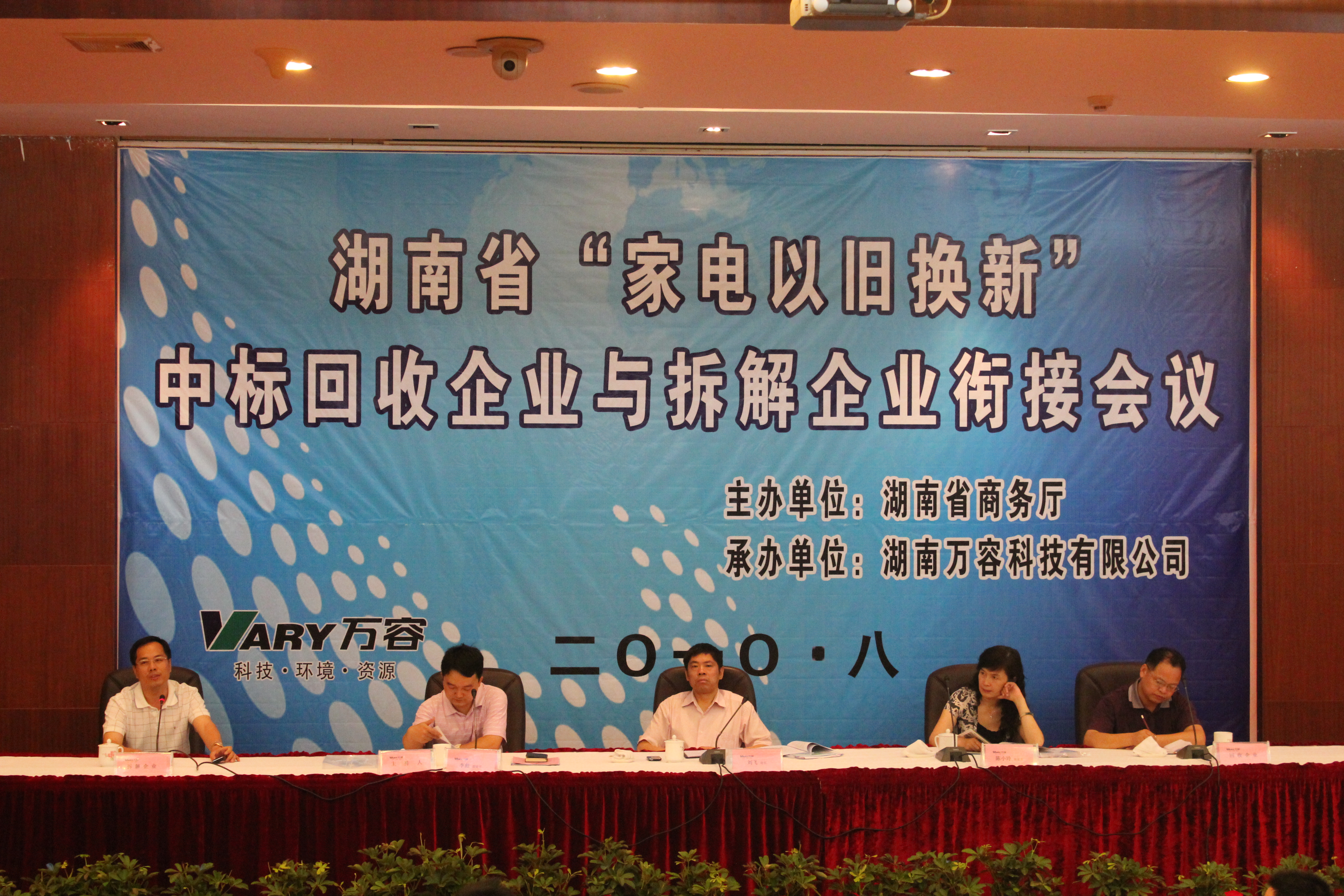
In 2010, the "Old-for-New" Appliance Replacement Policy launched as a pilot program in nine provinces and cities, including Changsha. This initiative marked the first time linking front-end "consumption stimulation" with back-end "recycling and dismantling." That year alone saw the collection of over 7.2 million old appliances, with nearly 3.5 million units sent to formal enterprises for dismantling. Also in 2010, Vary Tech, an industry pioneer, leveraged keen insight and technological innovation to develop China's first environmentally sound treatment and resource recovery equipment for waste refrigerators. This breakthrough led to Vary Tech's designation as an official recycling and dismantling enterprise for the first batch of national pilot cities under the "Old-for-New" program, providing critical technological support for the policy's successful implementation.
Phase 2 (2024): Igniting the Stock Market
Unprecedented Fiscal Support: The central government allocated 7.5 billion yuan for "reward-based subsidies", directly alleviating the financial pressure on formal waste appliance recycling and dismantling enterprises.
Strong Market Response: As of December 19, 2024, over 33.3 million consumers nationwide had participated in "Old-for-New" activities, purchasing more than 52.1 million new home appliances. Additionally, over 53 million home renovation, kitchen, and bathroom products were purchased under "refresh" subsidies. Full-year appliance recycling volume is projected to increase by over 14% year-on-year.
Accelerated System Construction: The Ministry of Commerce plans to establish a number of benchmark cities for recycling systems nationwide by 2025, fostering leading enterprises.
The core of this round of policy is injecting a massive "source flow" into the formal recycling and dismantling system from the outset, creating unprecedented opportunities for large-scale, standardized industry development. Vary Tech's subsidiary, Hunan Vary Tech Solid Waste Treatment Co., Ltd., became a designated recycling enterprise for the Hunan Province "Old-for-New" program. The subsidiary's innovative model for recycling waste appliances, furniture, and other renewable resources earned recognition as a pilot enterprise in the national renewable resource recycling system.
Opportunity and Challenge Coexist: Bridging the 60% "Informal" Gap?
While "Old-for-New" presents enormous opportunities, the policy also magnifies inherent industry challenges. Industry association data indicates that in 2023, formal dismantling enterprises in China processed 90 million units annually, representing only about 40% of the total waste appliance volume. This means over half, amounting to tens of millions of units annually, still flow into the "low-end, scattered, and chaotic" informal recycling channels.
Bridging this 60% gap is crucial for the policy's success and represents the core value proposition of professional enterprises. Formal enterprises, such as home appliance manufacturers like Haier, Gree, TCL, Changhong, Midea, and Hisense implementing extended producer responsibility (EPR) actions, and solution providers like Vary Tech specializing in recycling systems and dismantling, establish comprehensive recycling networks and efficient intelligent dismantling lines. Such efforts not only maximize resource recovery rates but also ensure environmentally compliant processing, contributing significantly to environmental benefits.
Global Perspective: "Old-for-New" as a Worldwide Green Wave and Policy Consensus
"Old-for-New" is not unique to China but represents a global wave of green consumption and circular economy. Countries worldwide, based on national conditions and industry characteristics, have explored diverse incentive and recycling models. Understanding these models is vital for grasping future industry trends.
USA: "Rebate" Model Driven by State Governments and Energy Giants
Unlike China's central government-led approach, US incentives feature a "state government + utility company" joint drive.
The US government does not explicitly call it "Old-for-New." Instead, programs offer "cash rebates" or utility bill credits to encourage consumers to purchase and use high-efficiency appliances bearing the "ENERGY STAR" certification. State energy departments or large electricity/gas companies (e.g., PG&E, ConEdison) run these programs as part of energy-saving and emission reduction (kWh saving) targets. For example, California residents buying a qualifying high-efficiency refrigerator or air conditioner can apply online with proof of purchase to receive a cash rebate check. Many programs also provide free doorstep collection of old appliances, ensuring direct entry into formal recycling channels.
UK: "Retailer Take-Back" Model Based on Extended Producer Responsibility
As a firm adherent to the EU's Extended Producer Responsibility (EPR) principle, the UK model mandates retailer responsibility for collection. Under the Waste Electrical and Electronic Equipment (WEEE) Regulations, all retailers selling electronic and electrical equipment must provide consumers with free take-back services for waste products.
Specifically, when consumers purchase a new appliance, retailers have a legal obligation to take back the old item of the same type for free. For small appliances, many large retailers like Currys provide free in-store collection bins, allowing consumers to drop off items anytime without making a purchase.
This policy maximizes recycling convenience by placing responsibility directly on the sales point closest to the consumer, effectively preventing improper disposal due to inconvenience.
France: The Unique "Repair Bonus (Bonus Réparation)" Model
France adopts a more forward-thinking approach, encouraging not just "replacement" but vigorously promoting "repair over discard."
The core mechanism, launched in late 2022, is the "repair bonus" system. When a consumer's appliance (out of warranty) malfunctions, choosing repair at a certified workshop qualifies for a direct government subsidy covering part of the repair cost. The subsidy amount varies by product category, and in 2024, the subsidy rate was doubled.
This policy holds significant strategic importance, aiming to extend product lifespans at the source and reduce unnecessary waste. The policy fosters a professional repair industry, deeply implements circular economy principles, and alleviates pressure on the recycling and dismantling sector, allowing focus on processing genuinely end-of-life products.
Japan: Society-Shared "Fee-Based Recycling" Model
The Japanese model features shared responsibility and consumer payment. The core mechanism, based on the Home Appliance Recycling Law, requires consumers discarding specific appliances (TVs, refrigerators, washing machines, air conditioners) to pay statutory fees (recycling coupon fee + transportation fee) covering collection and treatment costs. The responsibility chain is: Consumer pays fee → Retailer handles collection and transport → Producer (e.g., Panasonic, Hitachi) conducts high-standard resource recovery dismantling.
The success of this model is deeply rooted in Japan's strong societal environmental awareness and "not causing trouble for others" culture, making fee-based recycling a social consensus.
Comparison of Major Global Appliance Recycling Models
|
Country/Region
|
Leading Party
|
Core Mechanism
|
Consumer Role
|
Policy Focus
|
|
China
|
Central/Local Government
|
Fiscal Subsidy (Old-for-New) + Fund System
|
Receive subsidy, low-cost upgrade
|
Stimulate consumption + Standardize recycling
|
|
USA
|
State Gov/Energy Co.
|
Rebate
|
Apply for energy efficiency rebate
|
Improve energy efficiency, save energy
|
|
UK
|
Law/Retailers
|
Mandatory Retailer Free Take-Back
|
Enjoy free take-back convenience
|
Enforce producer responsibility, convenient recycling
|
|
France
|
Government
|
Bonus Réparation
|
Receive subsidy for repair
|
Extend product life, encourage repair
|
|
Japan
|
Social Contract/Law
|
Consumer Fee-Based Recycling
|
Pay statutory processing fees
|
Society-shared responsibility, high-standard resource recovery
|
In summary, whether through subsidies and mandatory take-back in Europe and America, or fee-based and deposit systems in Japan and Korea, promoting standardized waste appliance processing is an irreversible global trend. From its inception in 2010 to its large-scale deployment in 2024, the "Old-for-New" Appliance Replacement Policy has become the most powerful driver for China's waste appliance recycling and dismantling industry. The policy not only activates the consumer market but also provides a solid material foundation and policy guarantee for establishing a standardized, efficient, and environmentally sound national recycling system.
With the deepening implementation of the "Old-for-New" policy, establishing a standardized and efficient recycling and treatment system has become imperative for appliance manufacturers and local governments. This creates broad international cooperation space and market opportunities for enterprises mastering advanced environmentally friendly dismantling technologies, such as Vary Tech. As an industry pioneer having weathered two rounds of "Old-for-New" policy shifts, Vary Tech offers end-to-end solutions, from front-end recycling system planning to back-end intelligent dismantling plant construction.
Contact us now to discover how to leverage this policy momentum and jointly build a waste appliance recycling system that meets environmental requirements while delivering economic benefits, truly unlocking the value of the "urban mine."


