What your buyer will accept (specifications)
Whether your product meets compliance requirements
How much post-processing costs
| Project Scenario | Preferred Route | Not Recommended | Critical Pre-Validation |
| Small/medium scale; mixed PE/PP feedstock; limited budget; product initially sold as fuel oil or crude pyrolysis oil | Conventional pyrolysis with fractionation, dechlorination, filtration and basic stabilization | Complex catalytic cracking, hydrocracking, or gasification-to-chemicals | Feedstock consistency; continuous operation performance; oil quality specs; environmental permits; fuel sales compliance |
| Large scale; high-purity polyolefin feedstock; co-located with refinery or chemical park | Conventional pyrolysis + deep purification/hydrotreating; or catalytic cracking with online upgrading | Stand-alone small-scale fuel-oil line | Refinery/cracker acceptance criteria; sample testing; long-term off-take agreements; hydrogen supply; utility access |
| Target: light olefins, BTX, or high-selectivity chemicals | Catalytic pyrolysis, catalytic steam upgrading, integrated with FCC/aromatization | Low-temperature pyrolysis designed only for maximum oil yield | Catalyst lifespan; regeneration system; separation costs; net yield of target products |
| Complex mixed feedstock (uneconomical to sort); target: syngas, methanol or hydrogen | Gasification / partial oxidation + syngas purification + downstream synthesis | Conventional pyrolysis targeting high-quality PPO (Plastic Pyrolysis Oil) | Gasifier feedstock adaptability; tar/acid gas removal; syngas H₂/CO ratio; downstream scale |
| High-moisture feedstock, thin films or composite packaging; sufficient capital and licensed tech access | First evaluate dehydration/drying + pyrolysis; then assess supercritical water / hydrothermal routes | Direct deployment of large SCW (Supercritical Water) units without full validation | Salt/chlorine/ash corrosion; continuous feeding; O&M costs; commercial operating track record; insurance; permits |
| Government demonstration project; core goals: volume reduction, resource recovery, auditable carbon reduction | Sorting + polyolefin pyrolysis/upgrading + inert/residue compliant disposal; establish MRV system | Stand-alone "technology showcase" units without product off-take agreements | Material flow balance; carbon accounting boundaries; product end-use channels; compliance permits; public/stakeholder communication |
Now that we know where the product needs to end up, let's examine how each route behaves — in terms of reaction chemistry, feedstock tolerance, and engineering complexity.
What it is: Thermal decomposition of polymer chains (PE, PP, PS, etc.) under oxygen-free conditions — producing pyrolysis oil, wax, non-condensable gas, and solid residue.
Best suited for: PE, PP, and PS — especially mixed plastics with low mechanical-recycling value but decent polyolefin content after sorting.
Strengths & Weaknesses:
Strengths: Wide range of reactor types available, easy to scale up, high tolerance to feedstock variability.
Weaknesses: Wide boiling-range oil, high wax and olefin/diolefin content, impurity carryover, poor product stability without post-treatment.
Feedstock Guidelines
| Allowed (with pre-treatment) | Restricted / Must Pre-Remove |
| PE/PP concentrates, PS, films/packaging, sorted mixed polyolefins | PVC/PVDC, PET, PA, ABS, flame-retardant plastics, high-ash composites |
Continuous reactors → stable feedstock & long-term off-take
Batch furnaces → lower CAPEX, but poorer oil consistency & automation
What "Proven" Really Means: Lab-scale oil yield is NOT enough. At minimum, you need: Continuous pilot-scale or long-run test data, mass balance & oil/gas/carbon distribution, heat balance, impurity migration pathways, decoking cycle, condensing system stability, wastewater / off-gas / residue disposal plan, and third-party oil quality certification.
| Configuration | Risk Level |
| Single-stage: solid waste directly contacts catalyst | High |
| In-line: pyrolysis vapor passes through catalytic bed | Medium-High |
| Off-line: crude oil hydrotreated/upgraded separately | Medium |
| Co-processing: in refinery FCC / hydrotreater | Low-Medium (if refinery experienced) |
The Trade-off:
✅ Less wax and heavy ends
✅ More gasoline, LPG, light olefins, or aromatics
⚠️ More gas and coke deposition
When It Shines: High-purity polyolefin feedstock, stable production scale, viable catalyst regeneration system, secured refinery/chemical off-take, and long-run data proving selectivity, catalyst life, and economics. Liquid yield alone is NOT the right KPI.
The Bottom Line: Economics depend heavily on continuous operation stability and full-lifecycle catalyst management.
| Factor | Conventional Pyrolysis | Catalytic Cracking |
| Core mechanism | Thermal free-radical cracking | Catalyst-driven cracking + isomerization + aromatization |
| Feedstock adaptability | Relatively broad — but still must control PVC/PVDC, PET, metals, ash, moisture | Narrower — more sensitive to impurities and feedstock consistency |
| Temp & residence time | 400–550°C; varies by reactor and target | Lower temps or shorter residence times possible |
| Product distribution | Oil, wax, gas, char — wide boiling range | Higher selectivity for light fractions, LPG, olefins, aromatics — less wax |
| Oil quality | Usually needs post-treatment for petrochemical use | More concentrated target components — but impurities still matter |
| CAPEX / OPEX | Low-to-medium on reaction side; post-treatment varies | Higher CAPEX (reactor + catalyst system); OPEX includes regeneration & make-up |
| Commercial maturity | Many commercial references — but quality off-take is bottleneck | Pilot & commercial scaling accelerating — but long-term stability needs project-level proof |
| Best application | Small-medium scale; mixed polyolefins; priority on resource recovery & upgradable oil | Large scale; high-purity polyolefins; integrated with refinery/chemical complex; high-value product targets |
| Critical constraints | PVC/PVDC, PET, O/N impurities, metals, ash, moisture, heat-transfer coking, hydrotreating required | Catalyst coking; chlorine/metal/NOS poisoning; regeneration; dust carryover; product consistency — usually needs pre-treatment and/or downstream hydrotreating/separation |
A bankable chemical recycling project must rest on dynamic, full-lifecycle variable cost accounting. Use this per-tonne EBITDA framework:
Per-tonne EBITDA ≈
(Disposal fee / Feedstock price spread)
+ Σ(Salable product × Net selling price)
− Preprocessing cost
− Utility & energy
− Catalyst / Hydrogen / Adsorbents
− O&M labor
− Environmental treatment
− Logistics & warehousing
− Depreciation & financing
Chemical recycling of waste plastics is standing at the edge of large-scale industrial rollout. Pyrolysis and catalytic cracking are not mutually exclusive — in practice, they can work in tandem: feedstock splitting and staged purification to maximize overall value.
As a pioneer in plastic chemical recycling, Vary Tech brings 20 years of deep expertise in solid-waste resource recovery. Our post-consumer plastic chemical recycling demonstration plant has been in stable continuous operation for 5 years — processing over 110,000 tonnes of domestic plastic waste.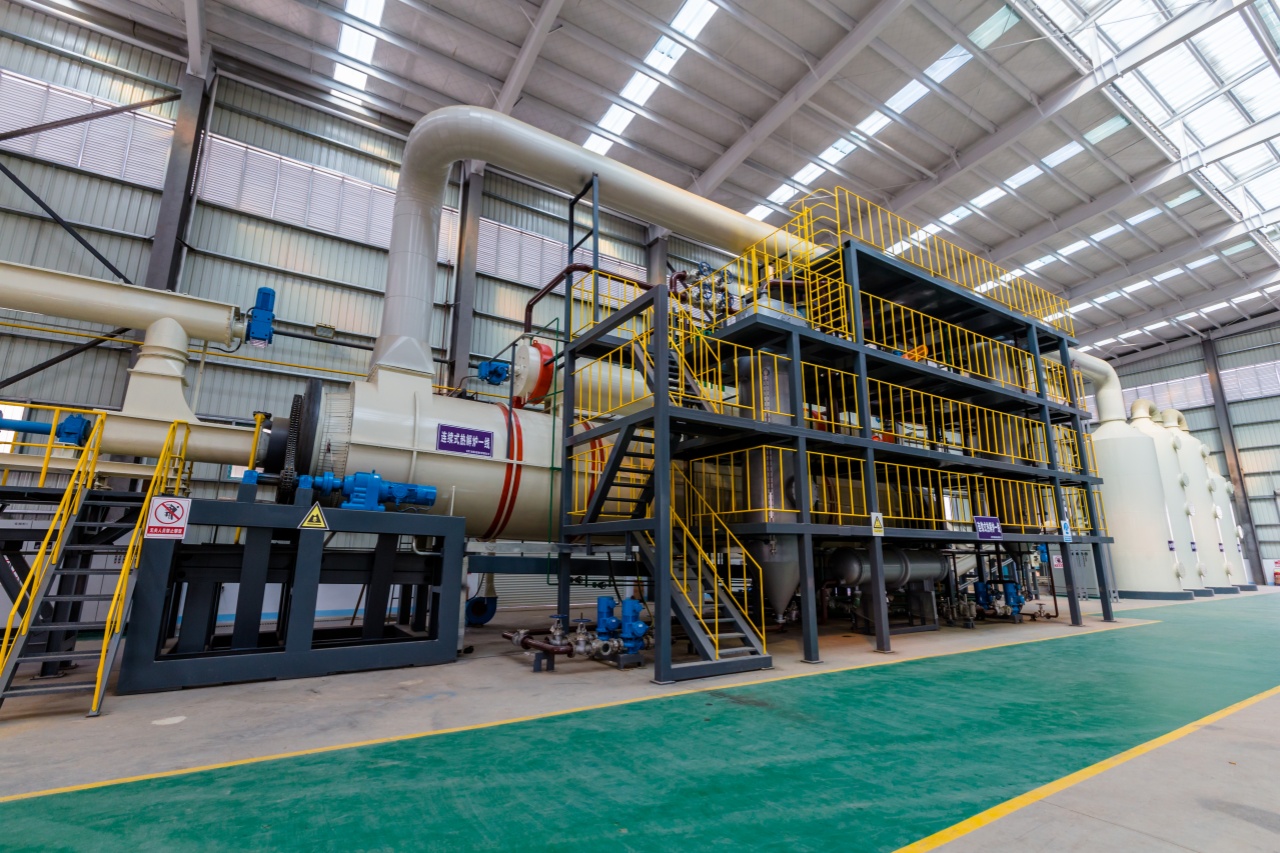
That's not a pilot. That's not a lab run. That's hard, real-world, industrial-scale data — and it has put to rest the industry skepticism that chemical recycling "can't run stably."
We've formed a strategic alliance with Evonik (global specialty chemicals leader) and SupeZET (top-tier petrochemical equipment manufacturer).
Our shared mission: build a fully closed-loop industrial chain —
Waste plastic → Oxygen-free pyrolysis → Deep purification → Petrochemical-grade feedstock
With world-class integrated equipment that meets international standards, we're enabling the global petrochemical industry's low-carbon transformation — at scale.
Catalyst technology is advancing.
Global policy recognition of chemical recycling is rising.
High-value green-closed-loop market share is accelerating.


