On May 7, 2026, the Open Coalition on Compliance Carbon Markets was officially launched, igniting an industrial decarbonization revolution driven by interconnected global carbon pricing. How can traditional sectors including steel, aluminum, cement and fertilizer achieve decarbonization? Biochar produced by Vary Tech's pyrolysis technology offers a viable pathway for the green revolution of the steel industry.
Rule Restructuring Under the Florence Bell
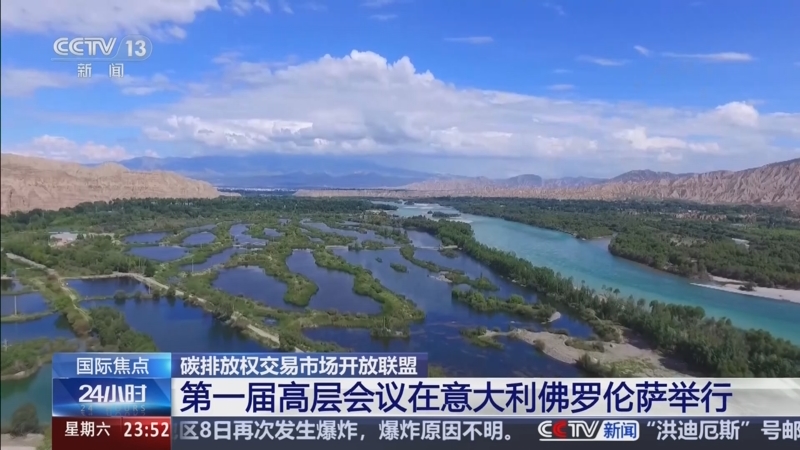
On May 7, 2026, Florence, Italy witnessed a "hidden rule-shaping competition" set to reshape the global trade landscape over the next decade. The Open Coalition on Compliance Carbon Markets, jointly initiated by China, the European Union and Brazil, was officially launched with its first high-level meeting held on the same day.
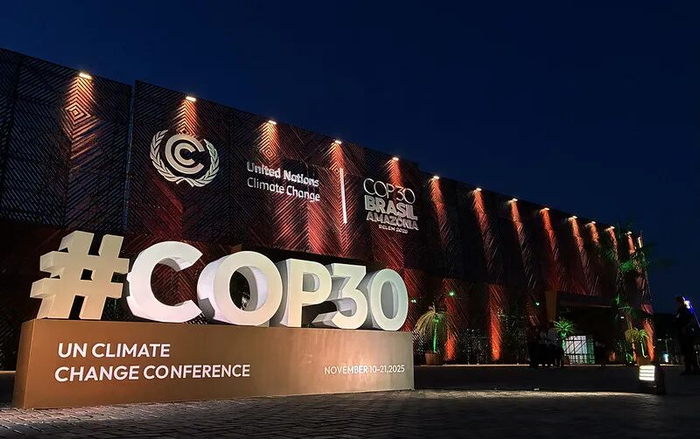
Launched on the sidelines of the 2025 UN Climate Change Conference (COP30), the Open Coalition on Compliance Carbon Markets is an international cooperation platform jointly promoted by Brazil, China and the EU to coordinate global compliance carbon market rules. Committed to building an interconnected, transparent and credible global carbon market network, its initial members cover approximately 40% of global carbon emissions. Germany and New Zealand have recently joined, marking the coalition's shift from an initiative to substantial development.
This coalition not only signals the transition of international carbon markets from scattered regional trials to global coordination, but also reveals a stark reality: the coalition's members already control over 40% of global CO₂ emissions. As China's high-energy-consuming industries such as steel, aluminum, cement and fertilizer are fully incorporated into carbon management, enterprises are faced not merely with environmental issues, but a life-and-death game of carbon costs. At this historic juncture, with its self-developed biomass oxygen-free pyrolysis and carbonization technology, Vary Tech provides the manufacturing sector with a core tool to break carbon tariff barriers and achieve high-value transformation — biomass torrefied pellets.
Global Carbon Market Coalition: The Invisible Access Pass for International Trade
Unlike previous voluntary-oriented carbon market cooperation, the newly established coalition centers on compliance carbon markets, with an ultimate goal of coordinating carbon pricing mechanisms across countries to realize interconnected, transparent and credible rules.
The EU's Referee Strategy
Drawing on two decades of operational experience and a 50% emission reduction track record of the EU Emissions Trading System (EU ETS), the EU attempts to promote its standards as a global model via the coalition, while seeking multilateral legitimacy for its Carbon Border Adjustment Mechanism (CBAM) — which entered its charging phase in 2026.
China's Role as a Rule Participant
Covering annual emissions of over 5 billion tons, China's carbon market is the world's largest. By co-chairing the coalition, China ensures its participation in pricing negotiations for core commodities such as steel and aluminum, preventing low-carbon barriers from evolving into new trade sanctions.
Brazil's Resource Leverage
Representing Global South countries with 15% of global carbon credit potential, Brazil strives to secure transition funds and technologies through high-quality nature-based solutions (NBS).
The coalition precisely targets four core industries accounting for more than 20% of global carbon emissions. Those who take the lead in the measurement, reporting and verification (MRV) methodologies for these industries will hold the lifeline of global industrial trade. For Chinese export enterprises, carbon management capacity has become a mandatory entry ticket for securing orders.
Pyrolysis Technology Revolution for Biomass: From Waste to Zero-Carbon Green Coal
Driven by global energy transition, China has rolled out intensive favorable policies for biomass energy. The state has explicitly required coal-fired power units to achieve over 10% biomass co-firing capacity, with clean heating included as a core provision in the Energy Law. China's biomass energy industry is projected to exceed 800 billion RMB by 2025.
Despite abundant resources, conventional white biomass pellets are hard to replace fossil fuels on a large scale due to high production costs, low energy density and poor storability caused by high moisture absorption. The market urgently needs a technological revolution — and torrefied biomass pellets are the core solution.
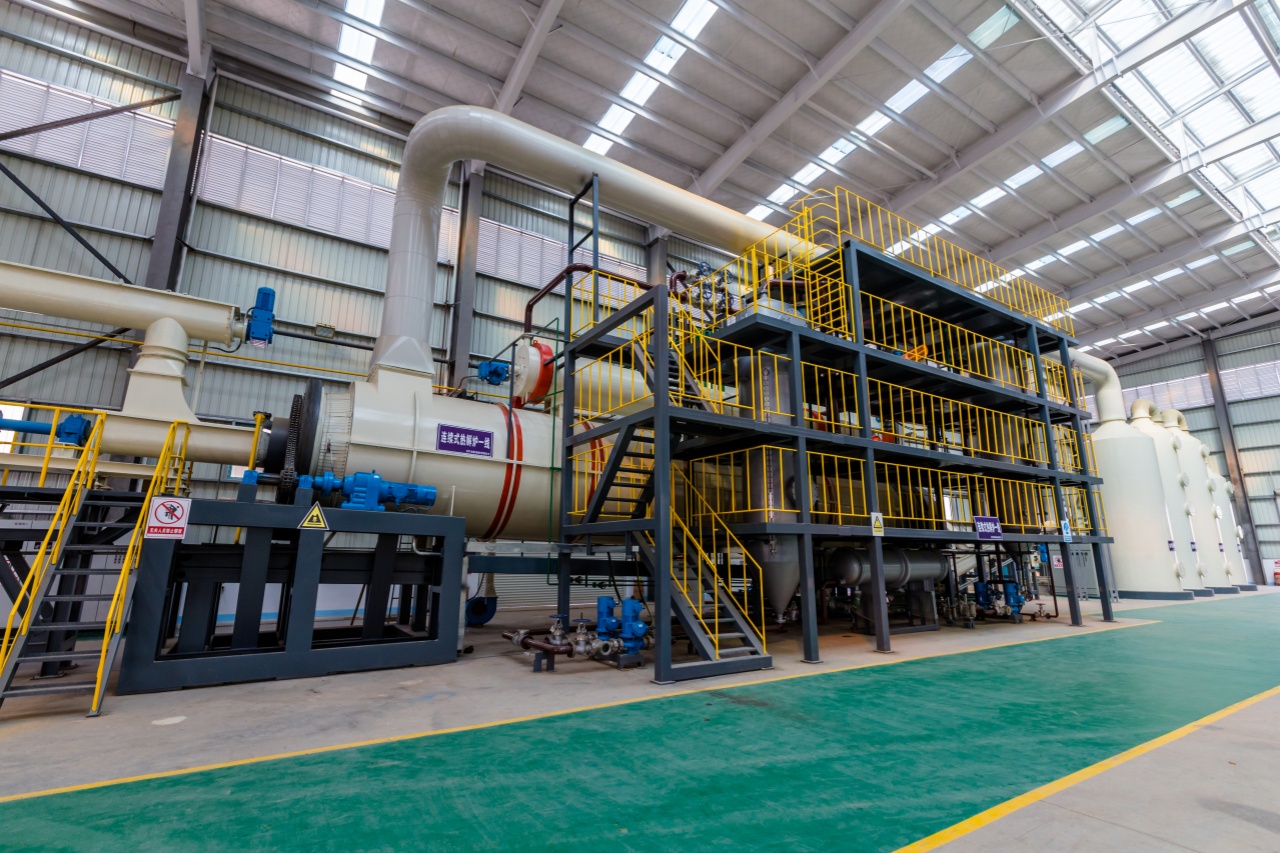
Vary Tech's self-developed biochar-based material pyrolysis production equipment has completely revolutionized traditional earth kiln carbonization processes.
Adopting technologies including modular flexible sealing, continuous feeding and continuous discharging, the pyrolysis equipment enables fully enclosed biochar production. Traditional earth kilns take over 20 days; Vary Tech's process takes just three. The equipment realizes self-sufficient pyrolysis gas recycling, cutting energy input by 20%. Apart from high-quality biochar, by-products such as wood vinegar and wood tar are co-produced, greatly improving the economic added value per ton of raw materials.
Torrefied biochar pellets produced via biomass pyrolysis exhibit coal-like properties for industrial applications. Pilot projects show that their bulk density reaches 0.7–1.0 g/cm³ with significantly enhanced energy density, delivering stable and efficient combustion performance. Hydrophobic in nature, the pellets are resistant to moisture in storage and transportation. With grindability similar to coal powder, they can be directly cofired with coal in high proportions without large-scale renovation of existing energy systems. In the metallurgical sector, biochar serves as a reducing agent, directly lowering the carbon footprint of exported steel products. With every ton of steel's carbon deduction accounted for, estimated savings on carbon tariffs exceed 10 billion RMB.
Full-Industrial-Chain Perspective: New Application Scenarios under the Carbon Market Coalition
As global carbon markets entered the institutional interconnection era in 2026, Vary Tech's biochar-based material pyrolysis production equipment is no longer merely environmental protection equipment, but a carbon asset generator for enterprises.
For manufacturing enterprises, carbon emission allowances constitute rigid operational constraints. Insufficient allowances force enterprises to purchase them at high prices, directly eroding profits. Vary Tech's pyrolysis technology produces torrefied biomass pellets from agricultural and forestry waste to replace fossil fuels such as coal and natural gas. Classified as zero-carbon or ultra-low-carbon under accounting systems, biochar reduces fossil fuel consumption and actual carbon emissions for equal calorific value, narrowing allowance gaps.
Enterprises therefore avoid high-cost carbon purchases and even gain relative cost advantages during periods of rising carbon prices. Furthermore, agricultural and forestry waste treatment and resource utilization projects powered by Vary Tech's pyrolysis technology meet the requirements for high-integrity carbon credits, featuring additionality, measurability and permanence. Waste branches, straw, nut shells and other residues are collected and converted, avoiding methane emissions (28 times more potent than CO₂ in greenhouse effect) from open-air burning or natural decomposition. Verified carbon emission reductions can be issued as Chinese Certified Emission Reductions (CCER), financial assets tradable on China's carbon market: enterprises can use them for allowance offsetting or sell them to other emission-controlled enterprises for direct revenue. In short, Vary Tech's biochar pyrolysis equipment is more than a tool — it's a quantifiable, monetizable carbon asset mine.
The value chain of torrefied biomass pellets extends far beyond fossil fuel replacement. When applied in broader scenarios as biochar, it unlocks more potential.
In agriculture, high-quality biochar acts as an excellent soil amendment. Its porous structure improves soil water and fertilizer retention capacity, regulates pH values, and provides habitats for beneficial microorganisms. Experimental data shows that biochar application increases seedling survival rates by 40%, reduces chemical fertilizer use by 30%, and sequesters stable carbon in soil for hundreds of years, achieving synergy between yield growth and emission reduction. This represents not only agronomic upgrading, but also quantifiable carbon assets.
In addition, with high purity, large specific surface area and electrical conductivity, biochar is a promising candidate for new material sectors. It serves as a high-quality precursor for activated carbon used in high-value fields including water treatment and air purification. More importantly, as an ideal precursor for anode materials of sodium-ion batteries — an emerging sector, biochar boasts advantages of low cost, renewable sources and adjustable structures. Sodium-ion batteries are expected to fill large-scale energy storage market gaps left by lithium-ion batteries, with biochar securing an upstream position in this industrial chain in advance.
The value chain of torrefied biomass pellets is bridging traditional and cutting-edge industrial boundaries.
China's Balance and Choices in the Rule-Shaping Competition
As the world's largest carbon market covered country and co-chair of the relevant international coalition, China aims not only to defend external carbon barriers but also to export replicable Chinese solutions. Vary Tech has supplied over 100 sets of pyrolysis production lines globally. These steadily operating projects, processing agricultural-forestry waste and industrial solid waste, provide practical models for low-cost green transition worldwide, especially for developing countries. From follower to leader, discourse power is backed by mass exports of core equipment.
Naturally, leadership comes with transition pains. After industries including steel and cement were incorporated into China's national carbon market in 2025, small and medium sized enterprises face sharply rising compliance costs. When carbon allowance prices stay at 80 RMB per ton or higher, every ton of fossil fuel burned eats into enterprise survival margins. What Vary Tech strives to do is continuously lower the full-chain cost of biomass energy utilization, enabling SMEs to survive and remain competitive amid this stress test. By replacing coal and natural gas with low-cost zero-carbon fuels, enterprises narrow allowance gaps and avoid collapse caused by high carbon purchase costs. Discourse power lies in the future; pain is felt today. Vary Tech's equipment bridges the gap.
Embracing 2026, Ushering in a Zero-Carbon Future Powered by Biomass Pyrolysis
The Florence conference on May 7, 2026 signed a work outline, yet drew the boundaries for future international trade. Those who take the lead in formulating carbon rules for steel, aluminum, cement and fertilizer will seize discourse power.
Vary Tech firmly believes that the era of biomass being merely low-grade fuel is over, and the era of biomass serving as a core carrier for industrial decarbonization has arrived. Under the framework of the global carbon market coalition, we provide state of the art pyrolysis technology and stand ready to cooperate with global upstream and downstream partners to turn every piece of agricultural and forestry waste into green power toward a zero-carbon future, jointly safeguarding the glory of our home, Star City and global climate security. 


