The European Commission has recently launched a key initiative aimed at promoting the recycling and utilization of waste plastics by establishing new rules for calculating, verifying, and reporting the recycled plastic content in single-use plastic beverage bottles. For the first time, this new regulation formally incorporates chemical recycling technology into consideration and proposes the "mass balance approach" as a core accounting method, bringing far-reaching impacts to the entire plastic recycling industry.

Chemical recycling of waste plastics is a process that converts waste plastics into valuable chemicals, fuels, or other reusable materials through chemical methods. To a certain extent, chemical recycling of waste plastics can effectively handle various types of plastic waste, including mixed plastics that are difficult to sort and degrade, and thus holds significant environmental and economic significance.
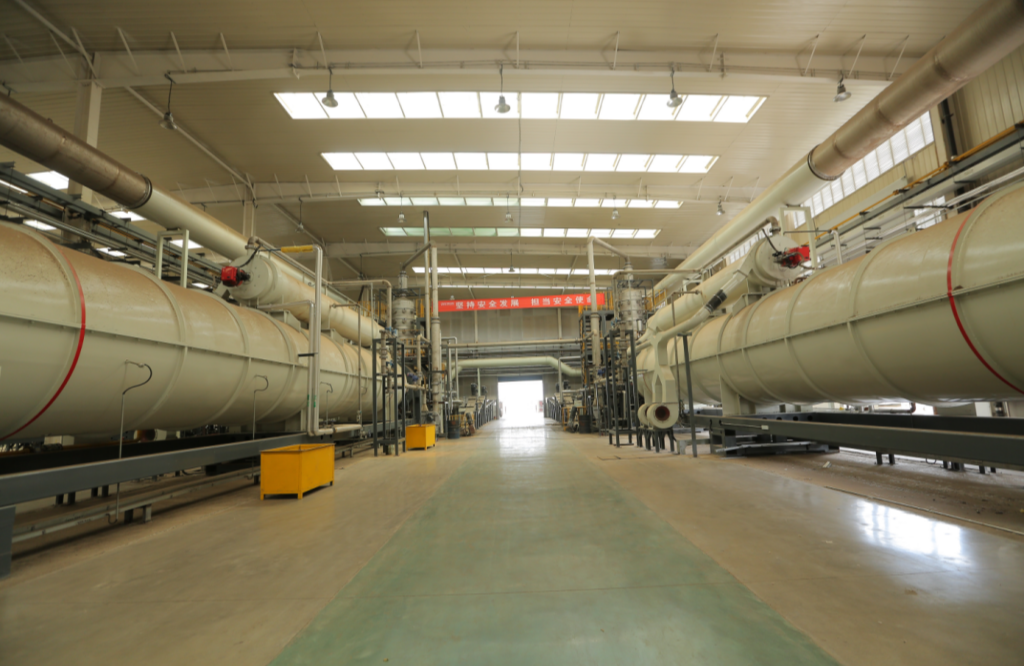
Chemical recycling technology mainly includes methods such as pyrolysis and gasification, which decompose plastics into valuable products such as monomers, oligomers, or syngas through chemical reactions. For example, vary tech’s chemical recycling system for waste plastics uses pyrolysis technology to treat waste plastics; under oxygen-free conditions, plastic waste is decomposed into liquid, gaseous, and solid products. These chemical recycling technologies can handle various types of plastics, improve the reuse rate of resources, and reduce environmental pollution.
As the EU faces increasingly severe plastic waste challenges, expanding recycling scale and improving recycling efficiency have become urgent priorities. For a long time, mechanical recycling of waste plastics has been regarded as the first choice due to its cost-effectiveness and low energy consumption.
However, mechanical recycling of waste plastics is not a one-size-fits-all solution. Its application is limited for certain plastic wastes that are difficult to classify, heavily contaminated, or require higher standards (such as food-grade).
During the mechanical recycling process, the molecular chains of waste plastics break and shorten during repeated heating and melting, leading to a decline in mechanical properties and transparency. For instance, after multiple rounds of mechanical recycling, PET beverage bottles may no longer be suitable for manufacturing food-grade beverage bottles that require extremely high purity and strength, and can only be downgraded for use in producing fibers, plates, and other products.
Plastics mixed with different colors, different materials, or contaminants such as food residues and label inks will seriously affect the quality of recycled plastics. This makes mechanical recycling unable to handle mixed waste plastics with complex compositions and heavy contamination. Therefore, relying solely on mechanical recycling will be insufficient to stably produce high-quality food-grade recycled plastics on a large scale.
Against this background, chemical recycling of waste plastics has been put on the agenda as a necessary supplementary solution. It can decompose complex plastic polymers into basic chemical monomers or raw materials, which are then repolymerized to produce new materials with quality equivalent to virgin plastics. The introduction of the EU new regulations is precisely to unlock the huge potential of chemical recycling of waste plastics through institutional guarantees and investment incentives.
To ensure the transparency and traceability of chemical recycling of waste plastics, the European Commission has proposed the "mass balance approach" in the draft new regulations. The core principle of this approach is: only waste plastics from post-consumer use (PCR) can be counted towards the recycled plastic content. Materials processed into fuels or used for energy recovery will not be considered as "recycled content". This regulation is consistent with the definition of "recycling" in the Waste Framework Directive.
For liquid or gaseous "dual-purpose materials", sufficient evidence must be provided to prove that they will eventually be used in plastic product manufacturing before they can be counted proportionally. The approach also sets strict technical details and verification requirements; for example, boiling point analysis must be conducted when liquid recycled materials enter steam cracking or pyrolysis equipment to ensure data accuracy. Meanwhile, to reduce administrative burdens, the verification cycle for small and medium-sized enterprises (SMEs) can be extended to once every three years, but all enterprises must bear the responsibility of inspecting their business partners.
The core of the mass balance approach lies in controlling the quantity of products entering and leaving the operating system through quantity balance adjustment, thereby ensuring the traceability and transparency of materials. For example, in the field of chemical recycling of waste plastics, this approach can ensure the transparency and traceability of recycled materials. The new regulations require the establishment of a strict supply chain traceability system. All operators involved in chemical recycling must submit detailed annual reports, specifying the quantity of plastic waste input for waste plastic recycling, the recycling output rate, and the quantity of recycled components allocated to products. Most importantly, all data and processes must undergo annual audits by independent third-party certification bodies to ensure the fairness of the calculation process and the authenticity of the data.
The public consultation period for the draft EU new regulations ended on August 19, 2025, and the European Commission plans to formally adopt the regulation in the autumn of 2025. It can be predicted that with the implementation of this policy, the recycling and reuse of waste plastics will enter a new stage of development, contributing more to the circular economy and global sustainable development.
The impacts of this draft new regulation by the EU will be multi-dimensional: it not only provides a "reassurance" for the waste plastic recycling industry but also reshapes the global plastic governance pattern.
Firstly, the new regulations will not only help the EU achieve the recycling targets set in the Single-Use Plastics Directive ( SUPD ) but also help EU chemical and plastic manufacturers enhance their competitiveness, promoting Europe to become a leader in sustainable innovation.
Secondly, the calculation method formulated for plastic bottles this time will serve as a reference model for recycled content rules in other fields (such as packaging, automobiles, and textiles) in the future.
Thirdly, the new regulations will provide strong institutional guarantees and investment information for the development of chemical recycling technology for waste plastics, attracting more enterprises and investments and promoting the large-scale commercial application of chemical recycling of waste plastics. At the same time, this will also force traditional petrochemical giants to incorporate recycled materials into their core supply chains; in the future, the competitiveness of enterprises will be reflected not only in costs but also in the ability to utilize recycled resources.
The strict standards of the EU have always been a leader in global regulations. This legislation on chemical recycling of waste plastics may drive other countries and regions to follow suit, thereby forming a new pattern of global collaborative governance of plastic pollution and promoting more plastic waste that would otherwise be landfilled or incinerated to re-enter the economic cycle.
Finally, the new regulations will have a certain impact on consumers' use of plastic products. For consumer brands facing pressure to meet recycling targets, chemical recycling provides an effective way to obtain large quantities of food-grade recycled plastics. With the unification of rules and the implementation of third-party verification, consumers will have stronger trust when seeing the "recycled materials" label on products in the future, which greatly enhances the value of the "green label".
The EU has taken a key step. It aims to use the power of rules to guide and regulate the chemical recycling technology of waste plastics, which has disruptive potential, and make it serve a grand goal—ending the era of plastic waste.
A profound transformation driven by policies and empowered by technology is taking place. It is not only about the future of the plastic waste recycling industry but also about the tomorrow when we coexist harmoniously with this planet. Next time, when we see a bottle that claims to use recycled materials, we may have a little more understanding and confidence, because the "rebirth" story of the bottle is being written by more scientific and transparent rules.


