Chemical recycling of plastic waste has become a key means to address "white pollution" and achieve resource recycling. Chemical recycling of plastic waste can convert waste plastics into valuable products such as oil, gas, and carbon, effectively reducing reliance on virgin resources and minimizing environmental pollution. This is not a fantasy but a scientific transformation based on the molecular properties of plastics.
The "plasticity" of plastics stems from their molecular structure, which is also the inherent condition enabling chemical recycling of plastic waste. Common plastics in daily life, such as polyethylene (PE), polypropylene (PP), and polystyrene (PS), are essentially high-molecular polymers composed mainly of carbon and hydrogen. Their molecules are long chains formed by repeating structural units linked via covalent bonds, with differences in chain length, branching degree, and stereostructure among different plastic types.
For example, polyethylene molecules are linear long chains formed by the addition polymerization of ethylene monomers (C₂H₄), featuring a simple and regular structure with relatively uniform intermolecular forces. Polypropylene, on the other hand, is polymerized from propylene monomers (C₃H₆), with methyl side groups attached to the carbon atoms of its molecular chain at intervals, increasing chain rigidity and spatial irregularity. Such long hydrocarbon chain structures are highly homologous in chemical composition to petroleum derivatives (e.g., naphtha, diesel). In fact, most plastics are themselves products synthesized from petroleum through multi-step reactions like cracking, reforming, and polymerization. Precisely because of this, waste plastics have the potential to revert to hydrocarbon materials at the molecular level.
Leveraging this structural property, chemical recycling of plastic waste processes—such as pyrolysis or catalytic cracking—can break carbon-carbon covalent bonds using external energy or catalysts, causing macromolecular chains to undergo bond cleavage and gasification. Subsequent processes like reforming and condensation then generate hydrocarbon products with different chain lengths. Ultimately, a variety of chemicals can be obtained, including light fuel gas, naphtha, diesel fractions, wax oil, and carbon materials, realizing a recycling cycle from waste to raw materials.
Chemical recycling of plastic waste is a complex and precise process, whose core lies in the "disassembly" and "reassembly" of plastic molecular chains. This process mainly includes pre-treatment, cracking, separation, and purification steps.
Pre-treatment of waste plastics is a key link to achieve efficient and high-quality recycling, with its core being the conversion of mixed waste plastics into homogeneous raw materials that meet the requirements of subsequent chemical reactions. This process mainly includes sorting, crushing, screening, drying, and other procedures.
Sorting primarily involves accurate separation based on plastic types (e.g., PET, PE, PP). Different plastics have distinct chemical structures and recycling processes, so strict sorting is the basis for ensuring the purity and quality of recycled products.
Crushing breaks large-sized mixed plastics into small pieces or fragments through physical means, significantly increasing the specific surface area of plastic waste. This improves heat and mass transfer efficiency with the reaction medium (e.g., pyrolysis furnace) in the subsequent pyrolysis process and accelerates the heating reaction rate.
After screening, plastic waste fragments with unqualified sizes are returned to the crushing process, while most attached or mixed solid impurities (e.g., sediment, metal shavings) are effectively removed, improving the cleanliness of raw materials.
Some cases require a drying process to remove moisture from the plastic surface via thermal means. Strictly controlling moisture content is crucial for subsequent thermochemical conversion processes (e.g., pyrolysis, gasification), as it can effectively reduce energy consumption, prevent side reactions, and ensure the stability of chemical reactions and the quality of pyrolysis products.
Cracking is the key link in chemical recycling of plastic waste, referring to the process of breaking plastic molecular chains under specific conditions. Depending on reaction conditions, cracking can be divided into thermal cracking and catalytic cracking. Thermal cracking mainly relies on temperature to break molecular chains, typically at 300-900℃. Catalytic cracking uses catalysts to reduce the activation energy of the reaction, enabling molecular chain cleavage at lower temperatures while improving the selectivity of target products.
During cracking, plastic molecular chains break according to specific rules. Long-chain molecules first break into shorter segments, which can be further broken into smaller molecules. Different reaction conditions affect the degree of molecular chain cleavage and product distribution. For example, lower temperatures and suitable catalysts are more conducive to generating longer hydrocarbon chain segments, which can be used as raw materials for gasoline, diesel, etc., after separation and purification. When the temperature rises above 600℃, molecular chains break more thoroughly, producing more short-chain hydrocarbons (e.g., methane, ethane, propane)—the main components of combustible gas. In an oxygen-deficient or oxygen-free high-temperature environment, some plastic molecules undergo carbonization to form carbon black.
The separation and purification stage separates the mixture generated by pyrolysis based on properties such as boiling point and density, obtaining high-purity pyrolysis oil, pyrolysis gas, and pyrolysis carbon. This stage requires multiple separation technologies such as distillation, adsorption, and filtration to ensure product quality meets relevant standards.
Due to differences in molecular structure and chemical properties, different types of plastics exhibit distinct characteristics during chemical recycling of plastic waste.
Polyethylene (PE) is one of the easiest plastics for chemical recycling of plastic waste. Its simple molecular structure and reasonable carbon-hydrogen ratio make it easy to produce large amounts of liquid products (i.e., pyrolysis oil) during pyrolysis. Studies show that 1 ton of waste PE plastic can produce 600-700 liters of pyrolysis oil through appropriate processes. This pyrolysis oil shares many similarities in performance with traditional petroleum-based base oils and can be widely used in fields such as lubricating oils and hydraulic oils.
Chemical recycling of polypropylene (PP) also has high value. During pyrolysis, PP generates large amounts of olefin compounds such as propylene, which can be used not only as combustible gas but also as chemical raw materials for producing new plastics. In addition, the liquid product (pyrolysis oil) from PP pyrolysis can be modified and refined into gasoline and diesel.
Polystyrene (PS) contains benzene rings in its molecular structure, making it prone to generating styrene monomers during pyrolysis—an important raw material for PS production. At the same time, PS can also produce a certain amount of combustible gas and carbon black through pyrolysis.
Chemical recycling of polyvinyl chloride (PVC) is relatively complex because its molecules contain chlorine. During pyrolysis, chlorine is released as hydrogen chloride, which corrodes equipment and pollutes the environment. Therefore, dechlorination must be performed first when conducting chemical recycling of PVC, increasing the cost and difficulty of PVC recycling. However, with continuous technological progress, chemical recycling of PVC has also made certain breakthroughs, with dechlorination efficiency continuously improving, making its recycling feasible.
Currently, Vary Tech—a Chinese enterprise—adopts oxygen-free pyrolysis technology to realize chemical recycling of plastic waste. The recycled plastic types include various household waste plastic bottles, waste plastic packaging bags, waste woven bags, waste express packaging, waste paper-plastic composite materials, and mixed plastic products, with the maximum daily processing capacity of a single set of equipment reaching 150 tons. These mixed household plastics are ultimately converted into pyrolysis oil, pyrolysis gas, and pyrolysis carbon through pyrolysis. Among them, pyrolysis gas is reused in the pyrolysis system, and surplus pyrolysis gas can be used as raw material for green hydrogen and green alcohol production. Pyrolysis oil can be modified and refined into gasoline, diesel, or further processed into chemicals such as olefins. Pyrolysis carbon can be used as building materials or fuel, or further processed into carbon black. Currently, this project has operated stably for 5 years and is China’s first large-scale chemical recycling project for household waste plastics.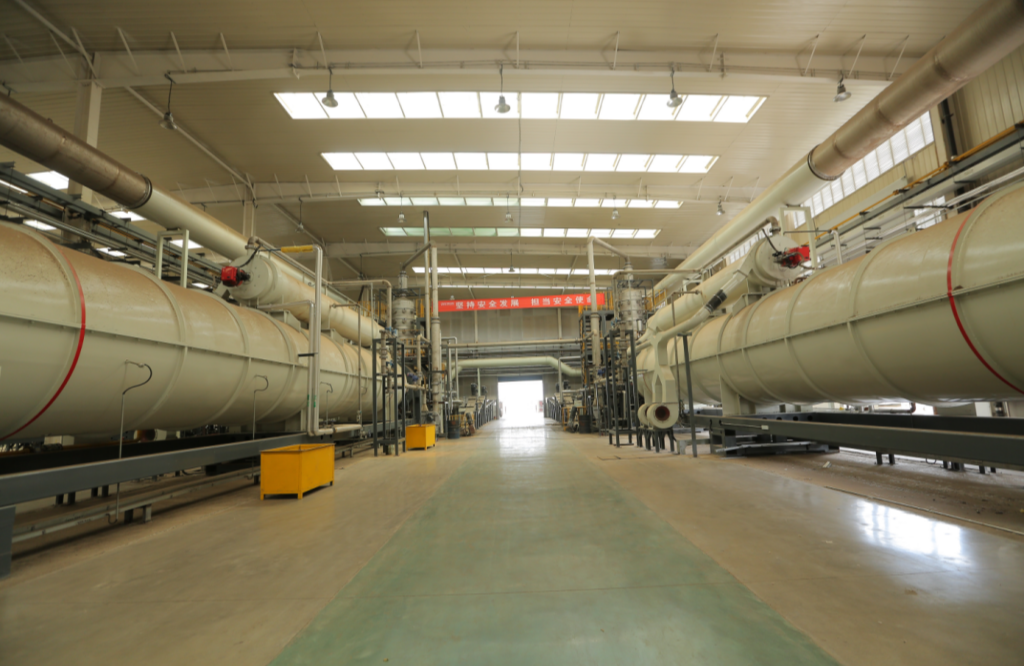
Chemical recycling of plastic waste is a technology of great significance. It not only addresses the "white pollution" problem but also realizes resource recycling, with significant environmental and economic benefits. With continuous technological progress and policy support, it is believed that chemical recycling of plastic waste will become an important method for plastic recycling in the near future, making important contributions to achieving sustainable development.


