As the global waste plastic problem becomes increasingly severe, chemical recycling of waste plastics—an disruptive technology in the waste plastic recycling industry—has attracted unprecedented attention from industrial capital and policymakers due to its ability to convert plastic waste into valuable basic chemical raw materials. There are six mainstream technical pathways for chemical recycling of waste plastics; today we focus on pyrolysis and depolymerization. What are the differences between the two? Which technology better suits your needs? We provide a thorough, in-depth comparison from multiple dimensions.
In chemistry and materials science, pyrolysis and cracking are conceptually similar and often confused or used interchangeably due to habits, simplification, or misunderstanding. However, they differ substantially in chemical principles, target applications, and operating conditions: pyrolysis emphasizes thermal decomposition in an oxygen-free environment, while cracking specifically refers to the process of breaking chemical bonds in hydrocarbon compounds through heat or catalysts.
Pyrolysis:
A process where organic substances decompose at high temperatures in an oxygen-free or low-oxygen environment to produce gas, liquid, and solid products. It involves breaking chemical bonds within organic molecules through heating, often accompanied by rearrangement and isomerization reactions, ultimately generating a series of low-molecular-weight compounds. Pyrolysis is generally classified into three types based on operating temperature:
|
Comparison Dimension |
Low-Temperature Pyrolysis |
Mid-Temperature Pyrolysis |
High-Temperature Pyrolysis |
|
Typical Temperature Range |
~600℃ |
600°C - 900°C |
Above 900°C |
|
Main |
Gas, liquid, and solid products; primarily pyrolysis oil |
Balanced gas and liquid (pyrolysis oil) products |
Gas and solid products |
|
Product Characteristics |
Dominated by pyrolysis oil; oil is rich in alkanes and alkenes (C15+), with low aromatic content |
Bridge between gas and liquid. Liquid contains increased aromatics and monocyclic aromatics; gas contains more low-molecular-weight alkenes (ethylene, propylene) and alkanes |
Dominated by gas (syngas); gas has the highest H₂ and CO content, plus low-molecular-weight aromatics (e.g., benzene) |
|
Chemical Recycling Goal |
Pursue high-yield liquid products for use as fuels or petrochemical raw materials |
Pursue aromatics within a specific molecular weight range or high-value monomers |
Pursue high-calorific-value syngas or maximize removal of organic pollutants |
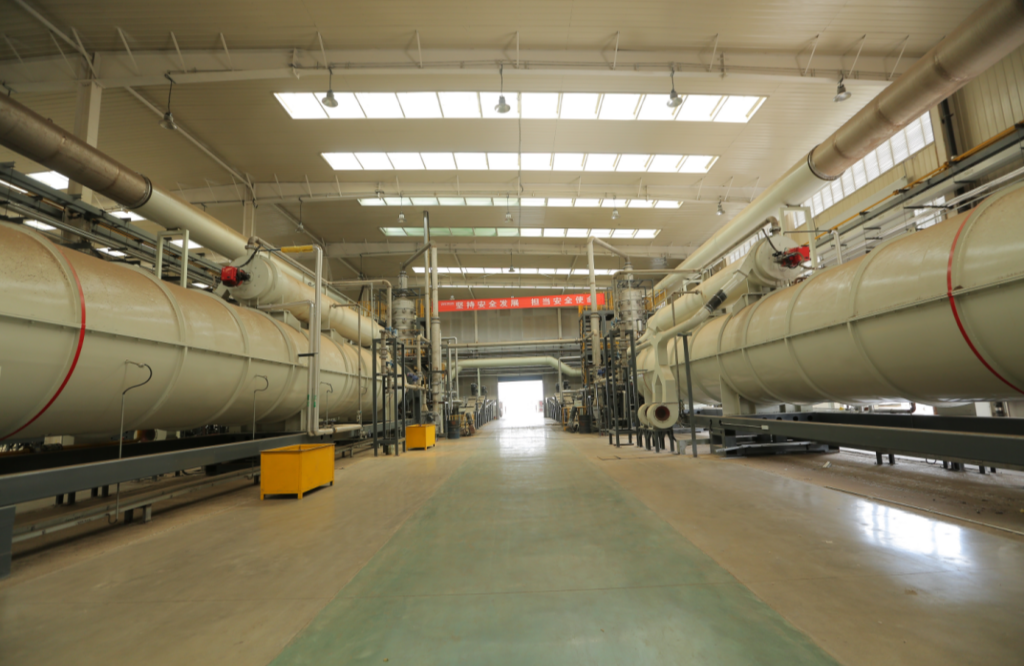
Depolymerization (also sometimes called solvolysis) involves supplementing condensation polymers with substances such as water, alcohols, or ammonia under specific conditions to break them down into monomers. Specific methods include hydrolysis, alcoholysis, enzymatic hydrolysis, aminolysis, ammonolysis, and glycolysis.
Hydrolysis:
A technology that depolymerizes plastics using water as a solvent, under the action of temperature, pressure, and catalysts. It is classified into acid hydrolysis, alkaline hydrolysis, and neutral hydrolysis, primarily differing in solution pH:
Acid hydrolysis:
Uses high-concentration inorganic acid aqueous solution. Requires low reaction temperature and no pressure, with high-purity products, but the system is highly corrosive and wastewater treatment is challenging.
Neutral hydrolysis:
Uses water or steam as the medium, with direct depolymerization at 250℃ and 4MPa. Environmentally friendly but high equipment costs.
Enzymatic hydrolysis:
Uses engineered enzymes to specifically cleave polymer bonds in plastics. Compared with other chemical recycling methods, it offers significant advantages of mild conditions, low energy consumption, and high selectivity.
However, most PET hydrolases require relatively high reaction temperatures and highly processed substrates to exhibit significant activity. Currently, France’s CARBIOS and China’s Yuantian Biotechnology are working to address this bottleneck.
|
Technical Pathway |
Core Solvent/Medium |
Main Products |
Technology Maturity |
Key Challenges |
|
Alcoholysis/Glycolysis |
Methanol/Ethylene Glycol |
DMT / BHET |
Mature, industrialized |
High raw material purity requirements; catalyst recovery |
|
Hydrolysis |
Water |
TPA |
Medium |
Equipment corrosion/high pressure; wastewater treatment |
|
Enzymatic Hydrolysis |
Enzymes (biocatalysts) |
TPA / MHET |
Emerging R&D |
Enzyme activity and stability; processing efficiency |
|
Aminolysis/Ammonolysis |
Amines/Ammonia |
Terephthalamide |
Laboratory research |
Solvent toxicity; safety and environmental risks |
In terms of technical implementation mechanisms and target product value, pyrolysis and depolymerization are distinct technical strategies.
Pyrolysis is essentially a "random chain scission" chemical reaction driven by temperature. It acts as a "scavenger" for addition polymers (e.g., PE, PP)—the most abundant and hardest-to-classify plastics in the market—and mixed waste plastics. Its goal is to maximize the conversion of waste plastics into energy or primary petrochemical raw materials, following an "open loop recycling" approach.
In contrast, depolymerization is a "precision reverse engineering" process relying on specific chemical media (water, alcohols, enzymes). It targets condensation polymers (e.g., PET, PC) with clear molecular structures that are easy to reduce. The technical challenge of depolymerization lies in precisely controlling reaction conditions and solvent recovery, but its product value is high—directly yielding high-purity virgin monomers. This makes depolymerization an effective pathway for closed-loop regeneration of waste plastics into food-grade, virgin-grade new materials, representing the superior value orientation of "closed loop recycling" .
In short: Choose pyrolysis when dealing with large quantities of mixed, low-value polyolefins; when the goal is to achieve infinite recycling of high-value plastics such as PET and PC,depolymerization is an irreplaceable cutting-edge technology. The two complement each other in the industrial chain, jointly supporting the future of chemical recycling of waste plastics.
Technical Comparison Between Pyrolysis and Depolymerization
|
Comparison Dimension |
Pyrolysis |
Depolymerization |
|
Process Nature |
Chain scission: Breaks polymer chains into small-molecule oil and combustible gas |
Chemical reverse reaction: Reduces polymers to monomers via solvents/catalysts |
|
Applicable Plastic Types |
Primarily addition polymers: PE, PP, PS, and mixed waste plastics |
Primarily condensation polymers: PET, PU, PC, PA |
|
Raw Material Purity Requirement |
Low. Can handle contaminated, mixed, low-value waste plastics |
High. Requires high purity of specific polymers and complex pretreatment |
|
Main Products |
Pyrolysis oil, pyrolysis char, and pyrolysis gas (combustible gas) |
Virgin monomers (e.g., TPA, BHET, caprolactam, etc.) |
|
Product Added Value |
Medium to high (depending on downstream deep processing applications) |
High. Enables food-grade, virgin-grade closed-loop recycling |
|
Commercial Recycling Model |
"Open loop recycling": Products enter the petrochemical raw material system or fuel market |
"Closed loop recycling": Products are directly used to produce new plastics of the same grade |
|
Technical Challenges |
Difficulty in oil purification; treatment of impurities (Cl/S); product yield and selectivity |
Solvent recovery costs; high pressure/corrosion issues; enzymatic activity and efficiency |
|
Short-Term Industrial Position |
Main force for processing large-scale, low-value mixed waste plastics |
Processes high-value, single-type waste plastics to meet high-end demands of brand owners |
Chemical recycling of waste plastics is entering a critical phase from technological exploration to industrial application. Pyrolysis and depolymerization are not simple substitutes but show trends of collaborative development and complementary integration.
Pyrolysis will continue to dominate the field of mixed waste plastic treatment, realizing the ultimate recycling of waste plastics. Depolymerization will focus on the virgin closed-loop recycling of plastics to meet food-grade and high-end manufacturing needs, with alcoholysis technology further expanding commercial scale in the recycling of high-value plastics such as PET.
We must clearly recognize that technological breakthroughs are the foundation of industrialization. Policy orientation, circular industrial chain collaboration, and economic efficiency are the decisive factors for large-scale implementation. In this promising track, only chemical recycling projects of waste plastics that align with policy directions, have high industrial synergy, and demonstrate prominent economic efficiency can achieve sustainable development.


